[unable to retrieve full-text content]
The two local markets defying the property slowdown K rockThe two local markets defying the property slowdown - K rock
Read More
[unable to retrieve full-text content]
The two local markets defying the property slowdown K rockA tropical rainforest spanning the entire Guatemalan Caribbean coastline is among the world’s richest pockets of biodiversity. Historically, it has also experienced some of the highest global deforestation rates, driven mainly by palm oil production and cattle ranching.
But a project known as the Conservation Coast run by a local NGO, Fundaeco is beginning to turn things around. Hailed as the world’s largest grouped forest-based carbon project, it protects more than 62,000 hectares of tropical rainforest and 30 threatened species, supports close to 500 local entrepreneurs, and, to date, prevented over 6 million tonnes of climate-warming CO2 emissions being released in the atmosphere.
On the other side of the globe, the Katingan Mentaya Project in Indonesia protects and restores 157,000 hectares of peat swamp forest. Immense carbon sinks that have developed over thousands of years, peat forests store 5-10 times that stored by carbon mature tropical rainforests. The project benefits 34 village communities, helps stabilize water flows critical for preventing peat fires, and protects some of the world’s most endangered animals. It has also issued an average of 7.5 million triple gold certified carbon credits per year via the voluntary carbon market since 2017.
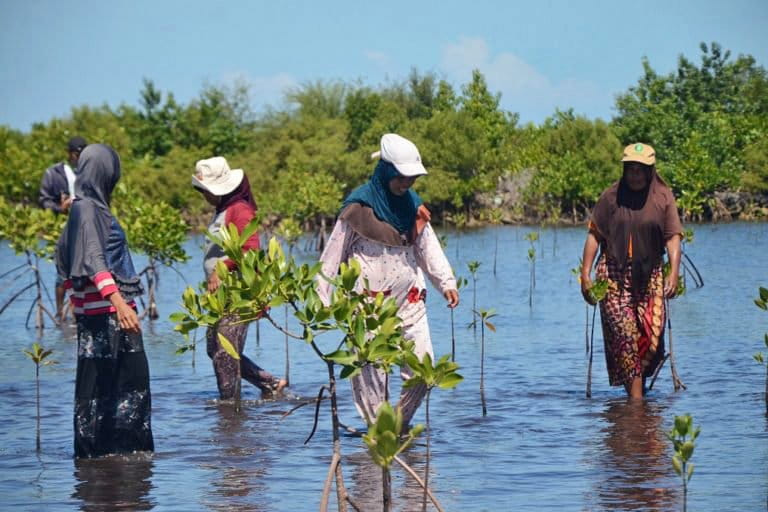
A continent over in Zambia, the Luangwa Community Forest Project is Africa’s largest REDD+ project generating income and social services to over 217,000 people. It protects over 1 million hectares of forest, or 514 million trees, and is one of the last remaining wildlife strongholds on Earth – home to wild dogs, elephants, and lions. The project contributed to 1.4 million tons of CO2 emission reductions in 2020.
A common thread uniting these projects is a new form of conservation finance that fuses community, wildlife, and nature with the help of the voluntary carbon market, which funnels “global north” money into “global south” projects in exchange for avoided emissions of greenhouse gas emission that are threatening to bring us to the brink of climate catastrophe.
These projects are also examples of how Nature-based Solutions (NbS) for climate are much more than avoided or removed emissions, but also create huge benefits for people and nature.
How can we mobilize the financing necessary to replicate such examples, on a scale necessary, across hundreds of millions of acres of mangroves, forests, savannas, wetlands, seascapes, farms, and cities around the planet, all helping to limit the rise in global temperature to 1.5°C, while benefiting people and nature?
As a groundbreaking study from 2017 suggests, NbS can deliver up to a third of emission avoidance and reduction needed by 2030 to limit global warming to under 1.5°C.
The voluntary carbon market could be a large part of the answer, but only if it operates within guardrails that ensure NbS interventions are of the highest quality and integrity, and that credits generated are issued and used with the integrity needed to accelerate greenhouse gas (GHG) mitigation.

At its core, GHG mitigation resulting from NbS must be additional to what would have occurred anyway, and robustly quantified against a credible, uninflated baseline. Measures will need to be taken to manage the risk of leakage, such as displacement of deforestation activities to another landscape, or reversals due to natural disasters (e.g., if carbon removed by restored vegetation is returned to the atmosphere due to intense wildfires or storm damage). Risk associated with double-counting – when credits are claimed both by the country where they are generated and the purchasing country – must also be managed and avoided.
Examples of robust measures include discounting credits to account for risk, creating buffer pools to compensate for reversals, and ensuring corresponding adjustments are made when credits are traded internationally. These issues will be looked at by the Integrity Council for the Voluntary Carbon Market’s “Core Carbon Principles”, which will drive the integrity and quality of carbon credits within the carbon market so this potential can be realized.
Alongside ensuring that GHG mitigation is real, the carbon market must internalize the role that biodiversity and people play in delivering impactful NbS. The market needs to recognize and value NbS benefits such as:
The carbon market should not only set minimum do-no-harm safeguards but also foster monitoring, verification, and reporting of social and biodiversity benefits, such that buyers can differentiate and give preference to credits with the most core benefits for nature, people, and climate.

But can the carbon market drive investment in NbS at the scale needed to halt global deforestation and habitat loss and restore hundreds of millions of hectares of land, and empower and benefit local communities? This scale of action will require working at a larger landscape level, bringing together all the different stakeholders, and working across a mosaic of land uses.
Success will be driven by scale and systemic transformation, and a jurisdictional approach to carbon crediting for NbS has the potential to deliver on both. Working within jurisdictions of national and sub-national governments, such efforts can include reform and enforcement of laws and policies governing protection and use of natural resources and recognition of the rights of Indigenous Peoples and local communities.
Jurisdictional approaches to crediting would require project-scale activities and their accounting to nest within jurisdictions and be assessed against a common baseline. They can also enable fairer deals with local stakeholders ensuring equitable benefit-sharing and respect of rights-holders such as Indigenous Peoples.
Advance purchase agreements for jurisdictional-scale credits will create the incentives to transition from stand-alone projects to jurisdictional-scale crediting.
In addition to supply-side mechanisms to advance the quality and scale of credits generated by NbS, the carbon market also needs to embrace demand-side guardrails to ensure that the purchase and use of credits enhances, rather than dilutes, climate mitigation goals.
Fundamentally, the market should motivate all companies and institutions to abate their emissions at a pace consistent with limiting global warming to 1.5°C. The market should oblige organizations to pursue a mitigation hierarchy and follow a science-based pathway to net zero emissions in their own value chain. Most organizations will nevertheless have annual unabated emissions on their path to net zero and some residual emissions that can’t be abated. They should be incentivized to purchase carbon credits generated beyond their value chain to counterbalance these annual unabated emissions on their journey to net zero. This bounded approach to use carbon credits will increase, not dilute, their contribution to global climate change mitigation.
How to pick a tree-planting project? Mongabay launches transparency tool to help supporters decide, learn more here
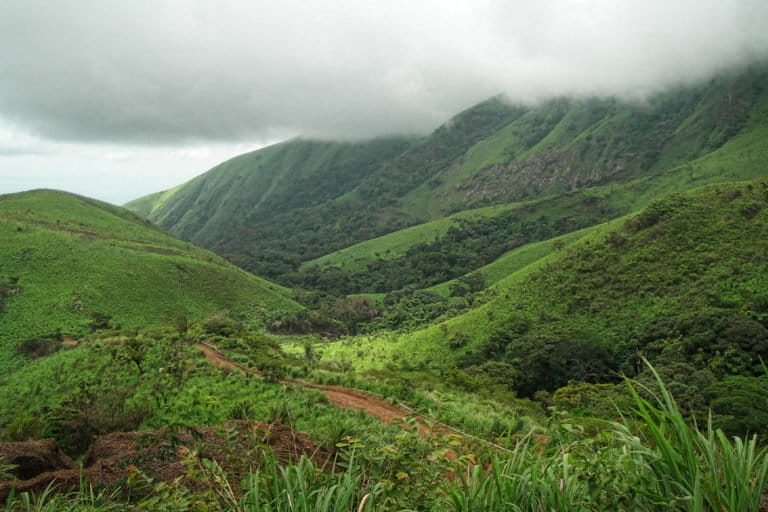
For example, the Natural Climate Solutions Alliance, a multi-stakeholder coalition of businesses, NGOs and solution providers, has created a NCS Investment Accelerator to aggregate corporate demand for 1 gigaton of CO2e of high-quality emission reductions and removals per year by 2025.
Participating corporations must use carbon credits generated by investments in NbS for climate mitigation to go above and beyond internal decarbonization required to meet the Paris Agreement goals.
The recently released Tropical Forest Credit Integrity Guide aims to help companies interested in high-quality tropical forest carbon credits to improve the integrity and impact of these purchases. It is another example of an initiative that brings us closer to a well-functioning and effective voluntary carbon market.
We see enormous potential for increased use of carbon credits generated by NbS to help deliver the Paris Agreement climate goals, foster the protection and restoration of natural ecosystems, and secure the rights and livelihoods of Indigenous Peoples and local communities. We also appreciate the challenge that companies are facing – going beyond value chain mitigation will require additional investments. However, as clearly stated by the recent IPCC report, we are almost at the point of no return, and therefore, we need to do more and faster. Investing in nature-based carbon credits to address the annual unabated emissions can certainly offer an important contribution.
Rod Taylor is Global Forests Director for World Resources Institute, Kavita Prakash-Mani is the former CEO of Mandai Nature, and Giulia Carbone is Director of the Natural Climate Solutions Alliance at World Business Council for Sustainable Development.
Related audio from Mongabay’s podcast: On this episode we look at mangrove restoration and the effectiveness of nature based solutions to climate change, listen here:
Beyond tree planting: When to let forests restore themselves
Participants in both the Men’s and Women’s Road races will ride the region’s famous Sea Cliff Bridge, the images and videos no doubt then being forever etched into cycling history.
Heading to the Gong for the 2022 World Championships? Here local rider and long time BA contributor Luke Meers offers a guide to the region.
Firstly whilst we now call these lands Wollongong or the Illawarra it is important to acknowledge that the entire course for the world championships lies on what has been Dharawal Country for thousands of years. In September it will be spring time according to our usual European understanding, but the Dharawal people have six seasons of the year and September falls in Murraiyunggory season marked by the changing temperatures associated with this time.
What an honour to be able to enjoy this beautiful land which has such a rich heritage. If you get the chance to visit us here in Wollongong for the racing we hope you enjoy the privilege of riding, cheering and having fun on Dharawal land.
The course
Starting in Helensburgh and finishing in Wollongong, the course has three main sections.
Section 1 The approach
Departing Helensburgh (south of The Royal National Park), the riders descend Bald Hill from Stanwell Tops while the race is still neutralised. Once at the bottom of this descent, the race will be on and riders will be battling to get in the break as the peloton flies along the stunning coast road through the northern suburbs.
This part of the course will only be utilised in the road races on the final weekend of the championships and boasting beautiful rolling coastal roads these are an essential place to ride when in the Illawarra (more on this later).
Section 2 Mount Keira loop
After going through the centre of Wollongong, the riders head out to West Wollongong and then tackle the biggest single climb of the race: Mount Keira. This is “the” climb of the Wollongong area, a beautiful 5.8km climb that averages 6.4%. The average gradient doesn’t tell the whole story of the climb though.

It starts very hard with the initial kilometre known locally as the kicker, which averages around 10%. The climb eases off after this for the final 5km which are steadier and will be fast enough that draft will be very important.
This climb comes early enough in the race, particularly the men’s race, that it will not be a race decider, but it will likely thin the field out somewhat. From here the course winds back down through Mount Kembla, a windy and at times steep and technical descent that will test the confidence and skills.
The course then winds back through some fairly wide and flat roads back to Wollongong’s city beach for the loops that will comprise the bulk of the interesting racing for all the events across the week.
The City Circuit
The city circuit is a weird one when ridden in traffic. However, on closed roads during the event, it should provide a super tough and entertaining circuit. From the start/finish area at City Beach, the course flows inland through the city and into the suburbs, it winds past the Botanic Gardens (a great option for family setup during the races) and then up to the main climb of the city loop Ramah Avenue.
The approach road to this climb is also noteworthy, Dumfries Avenue features 550 metres averaging about 7%, and the riders immediately turn right and have only about 20 seconds respite before turning up what will surely be the deciding climb of each of the elite races.
The 10% Ramah Avenue
Ramah Avenue (depending on where you measure from) is about 1km at 10%, but it is a climb of two halves: steep (15%), brief reprieve, and steep again. You know a climb is steep when you’re in the section that comparitively feels quite “easy” and then you look down at the computer to realise you’re still on a 7% climb. The final kick to the top exceeds 10% once again. The current KOM for the Ramah climb is about two and a half minutes, long enough to cause havoc in the bunch.

Once at the top, the riders take a couple of right turns to descend back down towards sea level; there aren’t sections of note along the final parts of the course in terms of difficulty but there are some great viewing options (discussed later). The finish is pan flat ready for a small bunch sprint or solo winner. It will be spectacular viewing along the road in front of Wollongong City Beach.
This circuit at just over 17km and around about 250m of climbing doesn’t feel too challenging when ridden once but six laps for the elite women and 12 laps for the men will make this a leg-snapping route which, combined with the lead-in course, makes a total of about 4000m elevation.
The TT Courses
The time trial courses will use the same circuit with the exception of the Ramah Avenue climb, so some of the viewing suggestions are relevant across all these events.
The schedule for the nine days in September is split into two sections, the first six days are all the time trial events around the city circuit. There is a training day on either side of this. Then Friday 23rd of September contains the Junior and U23 men’s races (just on the city circuit). Saturday has the junior women tackling the city circuit four times and then the elite women’s race starting in Helensburgh, taking in the Keira loop and then six city circuits.
Finally, Sunday finishes the championships with the men’s elite road race. Each event will be exciting viewing, particularly on the circuit when you get to watch the riders come past multiple times.
Top 5 vantage points
Here are my top suggestions of places to view the races from.
Ramah Avenue and Dumfries Avenue
This will be where the race is decided, the steep climb of Ramah Avenue will, I’m predicting, have a Willunga Hill type atmosphere. That means a lot of people, but also a lot of fun. Get here early to try and get a spot but also just be prepared to be part of the crowd and enjoy the atmosphere. Dumfries Avenue will possibly be a bit less crowded but the climb there will possibly be a solid leg loosener before Ramah and could see some lively racing. Also Dumfries is listed as a feed zone/dump location, so around this spot could to pick up a bidon souvenir.
Wollongong Harbour area
This will be a bustling and really fun place to watch the race from. You’ll get to see the riders each lap, and then in between, you can wander around what is sure to be a whole lot of great stalls and installations around the Lang Park and Flagstaff Hill areas. Take in the two lighthouses, maybe have a quick dip in the ocean, enjoy the harbour and I’m sure much more. Whilst there won’t be too much racing action in terms of attacks here, to be able to watch the finish of a World Championship race will be amazing!
Botanic Gardens
Wollongong’s beautiful Botanic Gardens lie in Gwynneville right on the city circuit. If you’re wanting a slightly more chilled place to park up for the day but still get to see the race, this is a great option. Set up a picnic near the Murphys Avenue entrance of the Gardens and walk 20m over to the road to enjoy the race each time it comes past. Perfect. There is a great playground here for the families to utilise too.
Mount Keira Rd – Gwynneville
Whilst the Mount Keira climb may not decide the race it will be fantastic to see the pros hit the climb hard. Snagging a spot to watch about 800m in to the climb, before the water tank on the right, will not only give beautiful vistas across Wollongong but will also allow you to watch the riders approaching from a distance.
My recommendation is to watch the Mt Keira ascent from here, then move to somewhere else on the city circuit to enjoy the remaining laps. The Gwynneville village area is quite close to here, it’s on the city circuit, and boasts some nice cafes and possibly less crowded viewing than the hectic City Beach area.
Elliotts Road Bridge (western side)
There is a unique spot on the course on the western end of the bridge on Elliots road where you can watch the riders approach, pass under you then loop around to go right by you over the bridge. This is in Fairy Meadow on the city circuit after Ramah Avenue and before the riders make it back to the coast. I really think this will be a fun spot to view from.
Enjoy watching the peloton from above and then see them kick hard as they hit the ascent of the bridge to ride straight past you. This spot will make for an easy escape too as there are no permanent road closures north of here.

Top Rides
The Illawarra is an absolute treasure trove of places to ride. It has the incredibly fortunate geography of being sandwiched between the escarpment and the ocean. As a result, for cyclists, there are options from flat rides to short punchy climbs through to long ascents.
Likely things you’ll encounter are ocean views, quiet backstreets and a range of forests. It is a tough place to be a cyclist. Here are a few great options of where to ride. For more detailed routes, visit the BA Strava page where I’ll have them uploaded as downloadable courses.
Mount Keira/Kembla loop (~30km)
As mentioned in the route description Mount Keira is a manageable and beautiful climb only a handful of kilometres away from the CBD, the road will be open during the week too as the climb will only be used for the Elite races.
Try and grab a spot on the Strava leaderboard or simply enjoy the climb. If you’re keen you can also turn left at the top and descend Mount Kembla, as the road race does then climb Mount Kembla as well. It is a more varied climb with pitches over 12% at times making it more difficult to pace well. Both climbs are lovely.
You could even stop for an ale at the iconic Mount Kembla pub on your way past. If you’re riding these climbs before (or after) daylight hours, just look out for the local wildlife when descending. I’ve had more than a few close encounters with deer, bush turkeys, lyrebirds and echidna here.
North to Helensburgh and RNP (feat bald hill) (50-120km)
Escape the CBD and head north. The coast road is beautiful as it winds its way towards Southern Sydney. Enjoy the rolling terrain doing the reverse direction of the road race course. Tackle Bald Hill, a 2km climb at around 10% then head into the Royal National Park for some beautiful forested roads with great road surfaces. Keep heading north for as long as you like before turning around and making the return trip along the same stunning roads.

Local punchy climbs (30-60km)
If you’re after something a little shorter but want a workout, you can still head north but take a few turns left (west) and find some of the many challenging sub-1km climbs up the escarpment. The locals all know about the challenges of the climbs up Hill St, Asquith St, Cater St, Denmark St and Morrison Ave. Expect gradients of above 15% on some of these climbs but the pain ends in a few minutes. At the top of the climbs just make sure to steer clear of any potholes caused by excessive vomiting from local riders over the years.
Lake Loop (~60km)
For something flat, you can head south of Wollongong and do a loop around Lake Illawarra. You’ll get some coastal views and lovely inland vistas of farmland and rolling hills.
Kiama/Jamberoo (~80-100km)
An extended version of the lake loop keeps you heading south to Kiama at which point you can turn inland to Jamberoo and either explore some of the tough climbs such as Saddleback Mountain and Jamberoo Pass or simply head north from Jamberoo through Albion Park and Dapto on your way back to Wollongong. This is one of my favourite rides, the scenery around Jamberoo in particular is just stunning and the rolling terrain is super fun and flowing.
“…There are too many quality cafes to mention. Wollongong has long had a thriving food and coffee scene thanks to the rich diversity of cultures…”
Macquarie Pass/Southern Highlands (80-200km)
For those wanting some longer epics, head south to Albion Park and then up Macquarie Pass (12km @ 6%) to find yourself in the Southern Highlands which offer an abundance of quiet country roads to explore. You could head to Roberston or venture further to Bowral or even down into Kangaroo Valley, from where you’ll have to do some serious climbing to either make your way over to Berry (then Kiama) or back up Barrengary Pass to retrace your steps.
There are almost unlimited options to pick up in the highlands and they are pretty much all good with plenty of food and drink options along the way.
Local’s guide on Top 5 non-bike activities
While in the area you may as well enjoy a few activities off the bike.
Swim Ocean Pools
There is a myriad of beautiful ocean pools (three saltwater pools and nine official rock pools, though there are more) along the Illawarra coast. The water will still be fairly chilly in September but nothing gets the blood flowing like a quick dip in a beautiful location. Emerging research also suggests cold immersion therapy may have numerous performance and recovery benefits. For great pools try out the Continental pool very close to the race finish line, Towradgi rock pool, Wombarra rock pool or head down to Kiama and try the pool near the blow hole.
Hikes
As mentioned, the Royal National Park south of Sydney is chock full of amazing walks. Walk the spectacular “coast track” and find some natural beauties such as the figure 8 pools or wedding cake rock. The National Parks NSW website has all the details required.
More locally, Mount Keira and Kembla have beautiful walking tracks, particularly the “ring tracks” on both mountains. These are locations of significance for the Dharawal people and contain simply amazing combinations of forests and coastal views. Mt Keira summit park has sections that offer explanations of some Indigenous stories from the area.
Blue Mile
This will no doubt be fairly busy but the Blue Mile is a section of walking/bike path near Wollongong Harbour and the lighthouses. If you’re bringing the family, there are playgrounds in this area too.
Beaches
Wollongong has some of the best beaches in the world. They are all quite beautiful but I would personally recommend heading to Port Kembla beach and enjoying the long sandy expanse stretching south for kilometres or going for a swim in the free pool which boasts stunning views of the coast. Just North of Port Kembla beach is an Indigenous walk that steps the participant through some local history.

Cringilla Mountain Bike Park
This newly-developed area contains 11km of quality mountain biking trails for all abilities. If you’re further north you could try out the equally impressive Helensburgh Bike Park.
Cafes
There are too many quality cafes to mention. Wollongong has long had a thriving food and coffee scene thanks to the rich diversity of cultures and nations represented in our local population. Here are a few convenient caffeine retailers with good coffee and suitable bike parking.

Goodies Coffee / Millers’ Local Bakehouse
A quirky cafe about 500m from the CBD. Not heaps of space but quality brew and great baked goods due to the hole-in-the-wall bakery.
Kiss and Drop
A small cafe not far from the base of Mount Keira. Named due to its proximity to the drop-off location of the local school.
Wilde Cafe/ Black Market Roasters
This northern gem is in Thirroul and the elite races will go past it on the lead-in section.
Flat White with One
About 8km north of Wollongong this is a great cafe in a quiet location (Russell Vale).
Steamheads
A great cafe about 5km south of the CBD (Unanderra), it is a convenient stop on the way back to Wollongong from one of the southern rides.

Cafes Near The Finish
These quality small cafes are all within about a kilometre of the finish line but far enough away that they may not be overly crowded – Diggies Kiosk, Lee and Me, Uncle Earl’s, Lili J, Café Léchappé, Utopia.
While coffee is great during the day, as the light fades there are plenty of quality local breweries, wine bars, gin bars and more to help quench the thirst. Many offer great food as well. Here are just a selection of local recommendations: Five Barrels Brewing (Wollongong), Rueb Goldberg Brewing Machine (Tarrawanna), Resin Brewing (Bulli), Seeker Brewing (Unanderra), Principle Brewing (Fairy Meadow), Wine in Wollongong CBD:, Night Parrot, The Throsby, Sonny’s Wine Shop.

A PIVOTAL cog in the Geelong Swimming Club (GSC) machine has been recognised on the national stage for her commitment to the local swim school.
GSC secretary Emy Simsic was awarded Swimming Australia’s Local Legend of the Year for the 2022 season, a result of more than eight years of service to the school based in Geelong’s Kardinia Park.
Nominated by Swimming Victoria for the award, Ms Simsic said it is a privilege to volunteer and help shape the region’s community.
“Swimming is unique with the early morning hours, but it’s a movement I love being part of,” Ms Simsic said.
“I’ve made many great friends and connections during my eight years as a swimming parent and volunteer.
“I am humbled to receive this award, never in my wildest dreams would I have expected this honour.”
Honoured at the Swimming Australia annual awards night on August 28, Ms Simsic received the award in her role as secretary.
A member of numerous Swimming Victoria committees and working groups striving to enhance the enjoyment of swimming for participants across the country, Ms Simsic also volunteers her time at club, district, school and state events.
Ms Simsic was also awarded Swimming Victoria’s Volunteer of the Year accolade last month.
Club president Glenn Benson said people like Emy are the reason swimming schools like GSC remain open, contributing countless hours of volunteering for the betterment of others.
“We are fortunate to have people like Emy who support our club. She has showcased what we can do on the national stage,” Mr Benson said.
“Volunteers are the lifeblood of our club and integral to the success of our programs.”
GSC reached its 140th anniversary in May and has more than 200 squad-level swimmers.

After a few early setbacks in the Hunter Central Coast AFL season, the wet weather has now given the Coast the gift of a home grand final.
The region’s only two senior men sides will face off in the decider, with local representation also featuring in the final clash in the women’s cup.
text will be replaced
Excitement is building as the NRL season moves towards a climax, with the Sharks one of just six teams remaining as the 2022 Finals Series heats up.
Allianz Stadium will be full of members and fans for the Sharks v Rabbitohs clash on Saturday night, likewise CommBank in Parramatta for when the Eels and Raiders also face off for a place in a Preliminary Final the following week.
In attempting to ramp up the hype around the NRL Finals, Roads to Glory, an NRL Game Development initiative has been engaging with Primary Schools in regions where teams are still alive in the premiership race.
Helping to deliver the Roads to Glory community messages through the League Stars Inspire presentation was Great White Shark #421 Bryan Norrie, the former NRL star an outstanding ambassador for the Sharks-themed visits to the Sutherland Shire schools.
A member of the Sharks squad for two seasons, Norrie was a hard-working front rower, playing an integral role in the team’s push towards a third-place finish on the NRL ladder in 2008. He played 25 top grade games for the Cronulla club over those two years.
In all Norrie’s career spanned 11 seasons and 180 NRL games, 120 for the Melbourne Storm where he was a part of the team which beat the Bulldogs in the 2012 Grand Final. He was forced into an early retirement in 2014 due to a neck injury.
Norrie was a popular visitor in representing the NRL and the Sharks at Road to Regions, attending St Patrick’s PS Sutherland and St Joseph’s PS Oyster Bay ahead of the game against the Cowboys, then St Francis De Sales Woolooware, Holy Family PS Menai and St John’s Bosco at Engadine earlier this week.
Norrie and the NRL Game Development staff also distributed NRL team posters and Zambrero Cheer Sticks to students on behalf of Sharks Have Heart to help celebrate what everyone hopes is continued success for the Sharks during the big games to come.


The first step is the easiest place to look for a hidden opportunity to help skyrocket your rankings. Is your website currently under any penalties from Google?
To check for penalties, your website needs to be connected to Google Search Console. If it isn’t, you, or the site’s owner, will have to connect and verify it first.
Log into Google Search Console as the site owner and select the website you are auditing in Search property.
 Screenshot from Google Search Console, August 2022
Then, in the sidebar on the left, click on Security & Manual Actions and choose Manual actions.
 Screenshot from Google Search Console, August 2022
If it says, “No issues detected,” great!
If it says anything else, there’s your first batch of problems to fix.
This is your first exciting dip into uncovering hidden opportunities with local SEO. There’s a lot you can discover and improve within this step!
For this step, you will need a list of keywords that you are trying to rank for.
You can probably deduce some of those keywords on your own.
For example, if you own a bakery shop in London, that’s already one relevant keyword candidate – “bakery shops in London”.
Once you have discovered your keywords, check them for two things:
Let’s start with discovering keyword rankings.
First, you need to find out if your website appears on a search engine results page (SERP) at all. Your ultimate goal is to appear either on page 1 or in the 3-Pack.
You can try Googling the keywords from your keyword list one by one, but it will be faster to use an SEO tool and check them all at once.
 Screenshot from WebCEO.com, August 2022
Simply scan your site rankings in WebCEO’s Rank Tracking tool.
This tool’s settings allow for scanning in specified locations, which is just what we need for local SEO.
It can even detect more interesting search results like the local pack, hotels, or Knowledge Panel.
Once you receive the report, look at the columns Position and SERP; they show where your site is ranking.
It also doesn’t hurt to check the Local monthly searches column, as it shows how often users type those keywords into Google.
If any of these columns aren’t in the report, press the Manage columns button to add them.
 Screenshot from WebCEO.com, August 2022
Now, let’s analyze your keywords for user search intent.
Search intent boils down to understanding what potential shoppers type into Google to get different results that match what they want.
For instance, a shopper might type in “buy blue iced baby boy sugar cookies in London” – this type of search has a “Transactional” intent. You want to make sure your keywords leverage transactional or commercial intent.
So, ask yourself these questions:
Now that you understand your position within keyword searches and the intent behind those keywords, you now have the information you need to modify your content strategy to boost your website’s rankings.
To begin with, do you or your customer have a Google Business Profile (GBP) listing?
If not, that’s really bad news for your local SEO. Fixing this is a really quick win for local search efforts, making it a great hidden opportunity!
If you do, log into the Google Business Profile and discover:
A blank field in GBP is a hole in your local SEO. All fields should be filled out with accurate, up-to-date information about the business:
Mind the character limits, too.
Keywords (especially local ones) in your GBP are a major ranking factor.
They can ensure your business will appear in Google’s very competitive local pack.
The catch is, you can’t just put them in the title and call it a day: that goes against Google’s guidelines, which demand using the business’ real-world name.
However, craftier owners simply include keywords when naming their businesses. It’s a perfectly valid loophole that satisfies both the guidelines and the ranking algorithm.
The only thing to worry about is making the name sound natural.
 Screenshot from Google, August 2022
Relevant keywords should also be included in the GBP categories. Putting them in the description is optional, although encouraged.
There are a variety of images you can upload to your Google Business Profile. The more you have, the better.
It goes without saying that all images should be of high quality.
Videos, too, deserve a mention as another type of visual. If there are any, watch them, and see if you can find any problems.
GBP allows you to create posts in order to communicate with your target audience. Take a look at the posting activity on the page.
Posting once a month is considered the bare minimum, so ask yourself these questions:
Frequent and diverse posts can ensure this feature is used efficiently. It’s also good for posts to contain links, photos, and geo-mentions.
An FAQ is a powerful asset for any website, and customers are guaranteed to have questions.
On-page optimization is incredibly important, making it a great hidden opportunity – especially if your competition isn’t doing this.
We admit it can be a lot of work, and there’s also plenty of room for mistakes, but if you get them all right, you’ll come out on top!
Waste no time dealing with problems. Find them all in WebCEO’s On-Site Issues Overview report.
 Screenshot from WebCEO.com, August 2022
This tool will scan all site pages at once, so you’ll be able to catch every on-page SEO error.
For a local SEO audit, here are the most important issues to keep an eye on:
Naturally, any other issues displayed in the report should not be ignored. They all negatively affect site rankings.
Backlinks are the most powerful ranking factor of all, making it a, you guessed it, hidden opportunity to rank higher than your competition.
Backlinks can make or break your SEO, even when you’ve done everything else right. No SEO audit is complete without a backlink analysis, and local SEO is no exception.
So make haste. Scan your link profile with WebCEO’s Backlink Checker.
 Screenshot from WebCEO.com, August 2022
Once your report is ready, it’s time to appraise your backlink profile.
Based on this analysis, you will be able to fix the flaws in your customer’s link building strategy.
A local business lives or dies by its reputation among customers. Good thing we have the internet, right? There’s no place like it to find out what people think about you, and lose all sleep over it.
Hopefully, your customers will keep sleeping well after you are done with this step. What should you check for?
Any self-respecting local business should be collecting customer reviews on its website. Positive and negative reviews, detailed feedback – be sure to pay attention to everything. A review is especially valuable when it has keywords your site ranks for.
Google Business Profile’s review section is another place you can’t overlook. And if your client has created listings for their business on any review platforms, be sure to check there as well.
Where there are reviews, there are usually star ratings on the same page, too. In fact, paired, they are very beneficial for SEO.
But it’s also common for business directories to display rating scores separately from user reviews.
If your client’s website appears in Google’s local pack, that’s the fastest way to see your client’s ratings. Of course, a thorough local SEO audit will require more information from other places.
Everybody wants their brand to be the talk of the town. Problem is, there’s only so much you can hear with your own ears and so much self-Googling you can do on your own.
Thankfully, there are tools for picking up the word on the e-streets.
Who, where, what, and when – find all your online mentions with WebCEO’s Web Buzz Monitoring tool. Just add the keywords related to the local business whose SEO you are auditing (its name will do best). The tool will show you the sites and the tweets where it has been brought up.
If your client has created social media pages for their business (as anyone should), you need to have a look at them, too.
How do you know if they are well run? Pass your judgment by answering these questions:
As a rule of thumb, lots of activity (from the owner and users) on a social media page is good. If you find any problems there, jot them down.
Would you like even more expert tips for a DIY local SEO audit?
Download your local SEO guide below. With this and pro-level SEO tools at your fingertips, you’ll be able to evaluate the state of any website’s local SEO – be it yours or your customer’s.
This guide was created exclusively for WebCEO users. Sign up now to enter the world of experts!

