[unable to retrieve full-text content]
Army can't keep filling local disaster gap South Coast RegisterArmy can't keep filling local disaster gap - South Coast Register
Read More
[unable to retrieve full-text content]
Army can't keep filling local disaster gap South Coast RegisterDespite a study claiming that food-mile emissions are higher than previously thought, eating less animal produce remains much more important than how far your food travels
Food isn’t necessarily less environmentally friendly if it has been grown thousands of kilometres away
Mike Kemp/In Pictures via Getty Images
Eat locally to reduce food miles and your carbon footprint. That is the message promoted by some environmentalists and businesses, but it has long been clear that often this isn’t true – foods that travel thousands of kilometres can have a lower carbon footprint than local produce.
At least, that is what many studies have found. But research published today in the journal Nature Food claims that global food miles account for 20 per cent of food-related emissions – a much higher proportion than reported in earlier work. So do food miles matter more than we thought? Spoiler: no, they don’t.
The production of the food we eat is responsible for more than a third of global greenhouse gas emissions, so reducing food-related emissions is crucial to limiting further global heating. The question is, what should consumers do to help reduce these emissions?
Previous studies have found that the emissions from food miles – the distance that food has to be transported from where it is produced to where it is eaten, measured in kilometres travelled multiplied by the tonnage – are tiny compared with those from growing that food.
Emissions can be calculated based on how the food is transported – by air or by sea, for instance. A study of US diets by researchers at Carnegie Mellon University in Pennsylvania concluded that transporting food from farms to shops produces just 4 per cent of food-related emissions, while a 2018 study of European diets put it at 6 per cent.
What this means is that if you want to reduce the carbon footprint of your diet, you should focus on buying foods with lower overall carbon footprints rather than those that don’t have to travel far. This basically means eating less meat and dairy.
For instance, producing 1 kilogram of beef can emit as much as 99 kg of carbon dioxide or equivalents, and making a kilogram of cheese emits up to 24 kg, compared with 0.9 kg for bananas and 0.4 kg for apples.
In other words, what you eat matters to a far greater extent than where it comes from. What’s more, even with the same food types, local isn’t always better. For instance, if you live in a nation with a cooler climate where tomatoes can be grown only using heated greenhouses, these local tomatoes will typically have a higher carbon footprint than those shipped in from a warmer country where no heating is needed.
The latest study doesn’t overturn any of this. For starters, the main reason why it concludes that food miles account for such a high proportion of food-related emissions is that the 20 per cent figure includes all the transport involved, including that of fertilisers, farm equipment and pesticides, not just the transport of food.
“Our study looks at the entire supply chain for food consumption, and naturally non-food commodities are part of it,” says team member Mengyu Li at the University of Sydney in Australia.
It is worthwhile to estimate this, but the team should use a term other than “food miles” to avoid confusion, rather than redefining the existing term, says Hannah Ritchie at the University of Oxford, who is head of research at Our World in Data.
If the standard definition were applied to the numbers in the study, food miles would account for only 9 per cent of food-related emissions, says Ritchie. That is much closer to previous research, though she thinks it is still an overestimate.
What’s more, the study itself calculates that even if it were possible to produce all food in the countries where it is eaten, food-related emissions would fall by only 1.7 per cent overall. This is because although food wouldn’t travel as far, more of it would be transported by road instead of sea, says Li, and trucks produce higher emissions per tonne of cargo than ships.
“So, overall, the bottom line is still that what you eat has a much bigger impact on emissions than the distance that food has to travel to reach you,” says Ritchie.
More on these topics:
[unable to retrieve full-text content]
COVID-19 vaccination – Local Government Area (LGA) – 5-11 years old – 20 June 2022 Australian Government Department of Health[unable to retrieve full-text content]
Local Legend Award: Pastor Hans van Asselt and Sally Kirby Mandurah MailAfter nearly two years of cancellations and strict COVID-19 restrictions, major events are starting to trickle back to WA, but Perth's event industry says not enough is being done to help local operators recover.
When the pandemic first struck in 2020 and borders were slammed shut, events and entertainment businesses were among the first to be hit.
Then the WA government decided to impose strict restrictions over the New Year's period, resulting in a loss of more than $26.5 million after 250 events had to be cancelled.
Months on from WA's border reopening and weeks since the removal of most COVID restrictions, major events are starting to return to the once 'hermit state'.
Later this month, the second State of Origin game will be heading to Perth Stadium for the first time since 2019 and is expected to bring around 11,000 interstate visitors.
The stadium will also host Perth's Festival of International Football in July, with Premier League club Manchester United taking on Aston Villa in one of the fixtures.
There was hope the border reopening in March and the easing of rules would also revive local businesses, but those in the events industry continue to struggle.
Mega Vision is one of the state's leading audio-visual providers and production companies, and caters for events ranging from small parties to large festivals.
Mr Georgiou said the ripple effect from cancellations around Christmas and the border backflip in February were still ongoing and he expected more recognition from the state government.
"We're not going to see some things until summer comes around but it's not going to be on the scale that it had been before," he said.
Mr Georgiou said he was tired of the events industry being grouped with tourism and sports, and not being given the appreciation it deserves.
"What the government doesn't understand is that we are the festivals, we are the council shows, we are the concerts, we are the weekend markets, we are the community shows, we are all those things classed as events, and they're not giving us support," he said.
"If something is to happen, if there's a fire or flood or a catastrophe, who's the first industry they come to for help? They come to us and say 'please put on a free concert to assist everybody' or 'please put on something to raise money for these flood or fire victims', and we've done that.
"But now we're the ones that are screaming for help and have been for two years and we haven't been getting it.
"The industry is hurting … and they have to do more to help us survive."
Mr Georgiou said revenue had dropped 80 per cent on pre-pandemic levels, and those in the industry had been forced to sell off equipment and cut staff to get through.
Since the start of the pandemic, the state government said it had injected close to $1.7 billion towards business assistance, including grants for those impacted by restrictions.
Mr Georgiou said he had waited four months for his claim to be approved, and while he was grateful for some support, it was "nowhere near enough".
"The grants are one-off, and the cancellations happen weekly for months and months and months," he said.
Mr Georgiou said he would prefer to see the government provide cost-cutting exemptions for businesses like his.
"We've all got vehicles, trucks, vans, carnival rides, food trucks that have been sitting in warehouses for a couple of years now, not doing a lot. But we're having to pay the registration, we're having to keep everything maintained, we're having to pay all the certificates and so forth," he said.
The vice president of WA's Events Industry Association (EIA), Blake Williams, said some businesses had missed out on the grants due to the costly application process.
"So many event suppliers said to me, 'it's going to cost us more money in accounting fees to get these grants than the grants are going to pay us,'" he said.
"We've explained that thresholds for grants are too hard, and the numbers are too low … we work in a gig-to-gig economy and that hasn't been taken into account when these grants had been administered."
Mr Williams, who runs his own entertainment agency, said he had to cancel around $30,000 worth of gigs during New Year's Eve and had only received $800 in compensation.
"As an industry, we're disappointed in the way that we've been treated a little bit," he said.
"We've continually asked for conversation, and we've said from the very start, give us a seat at the table and we'll talk through these issues, we'll make sure the industry is healthy, and we'll do it together."
But the EIA believes more focus has been placed on events coming from interstate or overseas, rather than local ones.
"It's great that we have these large events like State of Origin because it's a massive cash injection into the state, but it shouldn't be assumed that because we have a large flashy event that our local industry is not suffering," Mr Williams said.
"It's important that people understand that whilst those big events are happening, it's the local people that have been here through the pandemic that are still really doing it tough.
"We need to support the local industry, those local actors, musicians, dancers [and] technical people who have been here through it all, holding it down to feed their families … it's time to inject some money into the local industry as well."
Local businessman Jamie Mercanti who runs an entertainment agency, said the perception the industry was starting to bounce back because big shows were returning was not reality.
"The time when these shutdowns occurred, everybody in the entertainment industry understood the rules and went along with what was requested from them without question.
"But now the government needs to be doing a whole lot more because these businesses are active 52 weeks a year … it's not just a special event like the upcoming State of Origin game or the Manchester United game."
In a brief statement, the state government said it had done everything it could to "help protect WA businesses, local jobs and the economy from the full brunt of COVID-19".
"We've now passed the peak which is pleasing. WA's unemployment rate remains the lowest in the country and WA's economy remains strong – leading the nation," the statement said.
"Western Australians can have confidence to continue to support WA businesses and events."
But Mr Mercanti said it was up to the government to regain the public's trust in the sector after months of uncertainty and backflips.
"No-one has confidence to put anything on or even start planning anything," he said.
Loading form...
Posted , updated
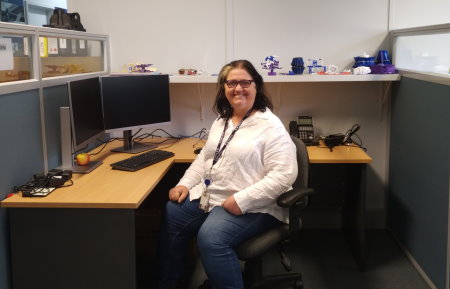
This week we’re celebrating International Women in Engineering Day and we spoke to Emma Coen to learn more about her journey from chemist to rocket scientist! With a passion for scientific study and research, as well as a life-long love affair with target rifle shooting, Emma Coen says the path that led her to work as a Senior Research and Design Engineer in the Research & Development Team in Australian Munitions was one of many happy accidents. Moving from the bright lights of Sydney to regional New South Wales, Emma has spent the last 15 years contributing to an industry she loves and is proud to be a part of. Here is her story.
Emma started her professional career as a theoretical polymer chemist, applying her knowledge in the pharmaceutical industry by developing inhalable insulin for a biotechnology start-up in the early 2000s. During this time, she also obtained a PhD from the University of Sydney and a Post Doctorate from the University of New South Wales, conducting research into high pressure gases and their unusual properties. Emma then moved into pharmaceutical formulations, in a biotechnology start-up. As with many start-ups, the company was experiencing financial challenges and Emma decided to pursue opportunities elsewhere. When Emma saw an ad for a position at Australian Defence Industries, she thought to herself “it’s a far cry from my work in polymers but I’ve been target rifle shooting since I was 14 so I know a bit about bullets.”

In 2007, she started working as a Product Development Scientist in the Research & Development team for Thales Australia in regional NSW. She was heavily involved in the development of mining boosters, a product that become very commercially successful. “When you’re in the lab mixing things in a beaker, you’re so concentrated on the job at hand, you don’t think much about the flow on effects. However, it’s been very gratifying to know I was part of something that has hugely benefited Thales and led to job creation, which is so important in small country towns.” During this time, she was selected to study and obtain a Master of Science in Explosive Ordnance Engineering from Cranfield University in the United Kingdom. “I’m never one to shy away from taking on extra studies to increase my knowledge so I loved my time there and am very grateful to have been given the opportunity.”
After another two years, Emma started to look for new opportunities within Thales to broaden her skills and experience. “I didn’t have to look very far or hard because as soon as I saw the high explosives plant, it was love at first sight.” She took on the role of Production Engineer – High Explosives and considers learning to be a shift engineer for the plant as one of her career highlights, likening it to driving a cruise ship - “challenging but so, so beautiful.” As much as Emma enjoyed her role, she realised that shift production work is difficult as a single mother with an energetic five-year-old and made the decision to return to her former team of Research & Development, in the role of Senior Research and Development Engineer.
One of the major projects she’s currently working on is the bilateral collaboration between Defence Science and Technology Group (DSTG), the Advanced Rocket Motor Technology Demonstrator. Emma explains that DSGT had spent eight years developing advanced rocket motor technology in the lab - Thales is now industrialising it to be made on a commercial and industrial scale. Emma is working on the propellant for larger rocket systems - one of the challenges when scaling up is ensuring the rocket fuel interacts properly with the rocket because the fuel starts curing as it is being made, “we have to mix the propellant ingredients fairly quickly to make sure we can pour it into the cases before it hardens,” explains Emma, ‘also, to ensure we keep a safe distance, we are in a building that’s a fair distance away when the ingredients are being mixed together, which means we can’t physically see and check its consistency. We have to rely heavily on advanced process control, and on our experience.”
Once the rockets are made, the team will start the testing program – both static burning and flight trials, in conjunction with DSTG and our Australian SMEs supporting this program. “If the rockets perform as we expect, then we may look to make even larger rockets. It’s a long-term strategically importance program, and is very exciting.”
More broadly, Emma and the team are looking to bring in the next generation of scientists and engineers into the Research & Development Team to support growth in sovereign capability. There is no university in Australia that teaches explosive ordnance engineering and so the Thales Australia’s strategy is to hire smart, passionate people to train and mentor whilst working with the education ecosystem to develop these courses. “It’s such a fascinating field and I encourage anyone who is interested in the field to just go for it,” Emma says before adding “It’s a male dominated industry, no doubt about that, but in all the years I’ve been in the industry, no one’s ever told me I couldn’t do something because of my gender. The Research & Development team hires talent based on merit and intellect. We value people who are passionate and are creative problem solvers.”
Find out more about the collaboration with DSTG here.
Find out more about Careers at Thales here.
A report finds "poor behaviour" in Victoria's local councils is stopping councillors and council staff from doing their jobs properly.
The state government report into culture in local government received 142 submissions, including from mayors, council staff and councillors.
"It is clear there is poor and unacceptable behaviour occurring in the local government sector," the report found.
Some of the themes raised in the council report have already been spilling out in local council meetings.
At Hume City Council — in Melbourne's north — the council recently revealed that, in less than two years, it had spent $142,898 of ratepayers' money in legal fees dealing with complaints about councillor behaviour.
The council tallied the cost of 22 applications for internal arbitration between November 2020 and May 2022, mostly made by councillor Trevor Dance.
Only two of the applications led to adverse findings.
The council noted the total amount did not include ongoing matters, including Mr Dance's appeal against a serious misconduct finding, and a complaint with the Victorian Equal Opportunity and Human Rights Commission.
At a meeting this month, councillor Jack Medcraft told the Hume Council the figure represented "a waste extreme".
"We're looking at $142,000 of ratepayers' money gone which, has basically gone down the gurgler, for what?" he told the meeting.
"Only one of the [complaints] was found to have breached the code and, ironically, it wasn't me, even though there was something like 17 investigations against me for all sorts of things."
Councillor Joseph Haweil said he had also been the subject of complaints that had not been upheld.
"Going through that complaints process can be quite traumatic and stressful," he said.
He urged his colleagues to work together to avoid disputes leading to increasing legal bills.
Mr Dance did not respond to the ABC's request for comment.
The state government commissioned the review into culture in local government in May 2021.
Among the top issues, 55 per cent of respondents were concerned about the level of training for councillors, 37 per cent raised issues with social media and 23 per cent raised issues with how poor behaviour was managed.
In March, the ABC revealed a former Moonee Valley mayor who had misled a community grants program was still sitting on the council.
In April, the state government appointed a municipal monitor to three local councils, to address issues with governance and culture.
The Local Government Minister, Shaun Leane, said problems with councils were not across the board.
"Councils are doing fantastic work every day, and there's 50,000 workers who do a great job every day," he said.
"But it is quite a sad thing that so much time gets spent on one or two individuals, and the way they are behaving."
He said the government would support councils and the local government sector to act on the report.
The report found that women, people from diverse backgrounds and those with disabilities were often not "inspired" to stand for election.
"When they do, they may face harassment, lack of formal support and retribution for calling out poor behaviour," the report found.
"There is a view that the local government sector is male-dominated, with a lack of flexible work arrangements for those with caregiving responsibilities."
In 2020, 272 women were elected in Victoria's local government elections — the most in Australian history, at 43.8 per cent of councillors.
Councillor Sarah Race loves representing her community at the Mornington Peninsula Shire Council, but said more needed to be done to attract and retain women in leadership.
The council has had 29 mayors, and only six have been women. Six have been called David.
"People are quite shocked at that, and it shows the issue with female leadership at the political level," Ms Race said.
She said many people in the community did not understand the role of councillors.
"It can be a 30-50 hour week, depending on what is going on. It is not necessarily family friendly and it does not pay well at all," she said.
The report noted there was concern about the level of council allowances.
"We have also heard through the submissions that the Councillor allowance is not reflecting the level of competency, responsibility and the amount of work required for the role," the report found.
In March 2022, the base allowance for a councillor was set between $24,080 and $53,957 per year, depending on the council.
The base yearly allowance for a mayor ranges from $74,706 to $238,634.
Victorian Local Governance Association (VLGA) chief executive Kathryn Arndt said more needed to be done to educate the public about the role of councils.
"These are multi-million dollar service delivery businesses that employ thousands of staff and manage significant budgets," she said.
She said it was important to acknowledge councils operated in "politicised environments".
"The VLGA welcomes the review into the culture of local government in Victoria — similar reviews are taking place in Tasmania — and other states are reporting increasing numbers of reports of poor behaviour in local government, most often in the council chamber," she said.
She said the VLGA would like to see better mandatory training for candidates, and more support for councillors.
Posted , updated


