[unable to retrieve full-text content]
Blues dig deep in local derby epic The MercuryBlues dig deep in local derby epic - The Mercury
Read More
[unable to retrieve full-text content]
Blues dig deep in local derby epic The Mercury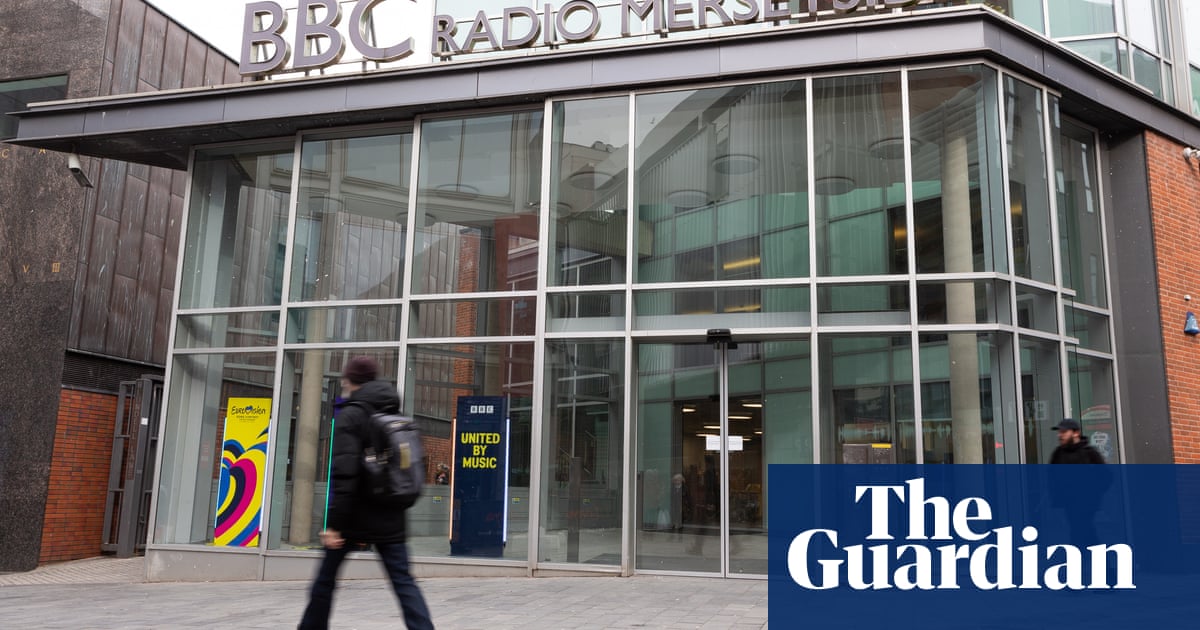
John Humphrys makes a powerful case for local journalism, but misrepresents the BBC’s plans to improve local news coverage and keep pace with the media habits of our audiences (Local journalism made me what I am today. Without it, we’ll all be the poorer, 30 March). Far from spying an opportunity to “save a few quid”, as John suggests, the BBC’s plans will see no reduction in either funding or overall staffing levels across our 39 local bases in England.
Instead, our goal is to provide greater value to communities by strengthening our local online news and audio services – supported by the creation of 130 additional news posts across the country. This will include almost 80 new investigative posts to improve the depth and rigour of the BBC’s local journalism across TV, radio and online. In addition, the plans will see the launch of four new local online news services, for Bradford, Wolverhampton, Sunderland and Peterborough.
At a time of constrained funding, these plans have inevitably involved some difficult trade-offs – including a greater level of programme-sharing between local radio stations at times of the day when fewer listeners tune in. But we believe our plans strike a better balance between our local online and broadcast services at a time when millions of people increasingly turn to their mobile first for news and information.
Rhodri Talfan Davies
BBC director of nations
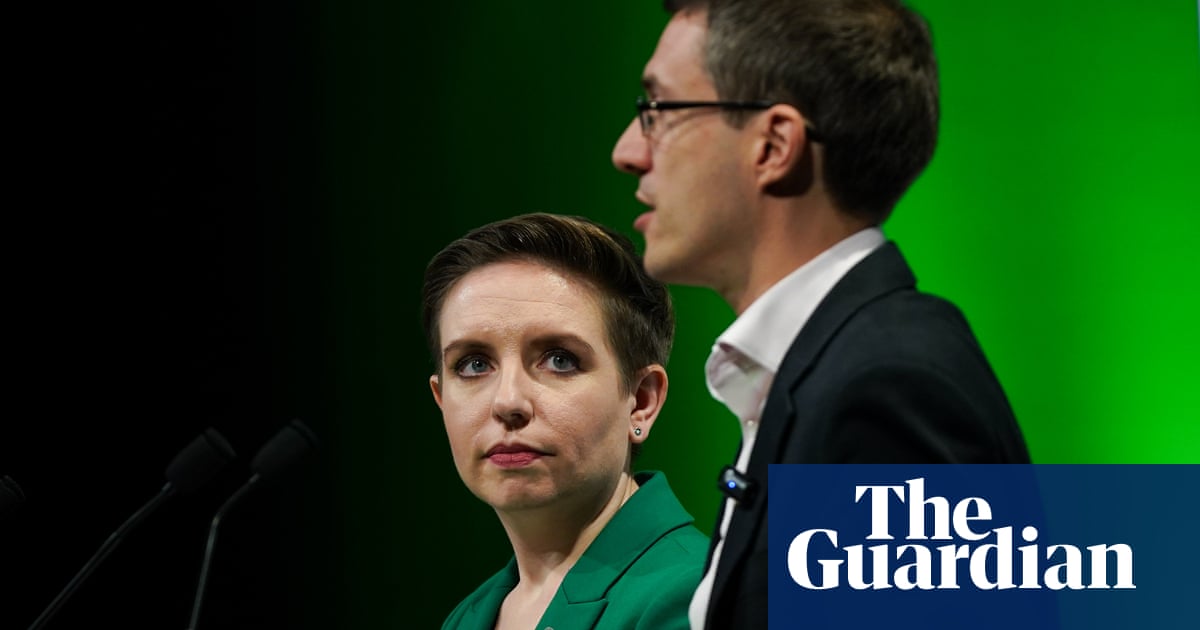
The Greens have launched their local elections campaign with a pledge to push for rent controls and a mass programme of council houses built to “Passivhaus” environmental standards, with the party predicting further gains on 4 May.
The co-leaders of the Green party in England and Wales, Adrian Ramsay and Carla Denyer, set out the housing policies in Stowmarket, where the party hopes the local council, Mid Suffolk, could become the first where it gains majority control next month.
In recent local elections the Greens have taken numerous seats from Labour in urban areas, but are increasingly targeting Conservative-held rural councils and former Tory voters who, Ramsay said, felt taken for granted.
“There’s a clear sense on doorsteps around the country that people are disillusioned with the Conservatives and uninspired by Labour, and looking for an alternative,” said Ramsay, who is the Greens’ candidate for the newly created seat of Waveney Valley, which includes much of the Mid Suffolk district.
“We expected our success against Labour to continue, but we also expect to see substantial growth from the Conservatives, including in places like Suffolk – we are very clearly main challengers to the Conservatives in most of rural Suffolk.”
The party’s housing pledge would include rent controls, to limit increases, and a plan to build 100,000 council homes a year, each to the Passivhaus or equivalent standard, under which strict insulation and energy efficiency standards would reduce the cost of bills.
Wider changes to planning laws would require all new housing, whether public or private, to meet similar efficiency standards and to have solar panels and heat pumps fitted.
The plan also calls for new housing developments to only be built with a matching investment in local infrastructure, including schools, GP surgeries and sustainable transport. Housing was, Ramsay said, “the big issue” in rural areas, as well as in towns and cities.
Opposition parties have sometimes accused Green councillors of nimbyism for opposing developments. But Ramsay said it was simply a case of seeking the right sort of housing, not just speculative developments that did not benefit the community.
“People see expensive new homes being built around them that are out of their reach, so they are priced out of their own community, often without the investment in the local infrastructure that is needed to support them, and often not to the right environmental standard,” he said.
Next month’s vote involves seats across England last fought in 2019, when the Greens staged the first in a recent series of big successes in local elections, winning nearly 200 extra seats.
Ramsay, who took over the leadership with Denyer 18 months ago, said that even in this context, the party was “confident of further substantial gains”, saying that success would be seen as at least another 100 extra seats.
Much of the Greens’ recent success in local elections, he said, was down to energetically campaigning in long-term Conservative and Labour strongholds where the incumbent party had become used to automatic success.
“They have had councillors and MPs for decades who are out of touch with what the community needs. They’ve never been challenged electorally before, so they get complacent,” he said.
“And they often don’t know what to do when Greens come along and start campaigning. Their response is sometimes to put out a leaflet that copies Green party branding, but that doesn’t really work.”
A new vending machine selling fresh bear meat has been installed at a bullet train station in Akita, north eastern Japan, the Japanese daily Mainichi reports.
The machine offers lean and fatty black bear meat for about $24.50 for 250 grams.
There are about 10,000 black bears in Japan.
The species classed as internationally vulnerable, however Japan says there are limits placed on the numbers that can be hunted, the BBC reports.
The bear meat in the vending machine is supplied by local hunters. The machine is operated by a restaurant, Soba Goro, and there are hopes it will create interest from tourists.
The machine usually sells about 10 to 15 packets of meat a week, but supplies sometimes run out because the bear hunting season is limited.
A Soba Goro representative told Mainichi: "(Bear meat) tastes clean, and it doesn't get tough, even when cold. It can be enjoyed in a wide range of dishes, from stew to steaks."

Man lost at sea becomes instant celebrity after survival story revealed

The Green Party is calling for property developers to provide more funding towards local services, as it launches its local election campaign.
Co-leader Adrian Ramsay said too many areas, particularly rural ones, had been left without proper infrastructure when large estates are built.
Property firms, he added, had been allowed to "chase the biggest profits and ignore local needs".
The party also wants tighter planning rules on the location of new housing.
The local elections, to be held on Thursday 4 May, will see 230 local authorities in England choose some or all of their councillors.
They will be the largest set of polls before the next general election, expected to be held next year.
The Green Party of England and Wales will put housing centre-stage at an event in Suffolk to officially launch its campaign later.
The party currently has roughly 540 councillors in England and Wales, around 200 of them won in 2019, when most of the seats were last contested. It says it will be defending 281 seats at this year's polls.
The party has run councils before, but it is hoping to win outright control of its first major council at the ballot box this time around.
It says planning rules, administered by local councils, should be changed to promote the renovation of existing buildings, in a bid to reduce the environmental impact of new construction.
The party also says new developments should be designed to reduce the use of cars, including by building near train stations or frequent bus services.
Under its plans for stricter energy efficiency rules, developers would be required to install solar panels and heat pumps in new build homes.


In comments briefed to journalists ahead of the launch, Mr Ramsay said "too many villages and towns" had seen large developments built without new facilities such as GP surgeries, bus services, cycle lanes and schools.
"Developers are being allowed to ride roughshod over the needs of communities and the environment and this has got to stop," he added.
The Greens say they would make infrastructure requirements in local development plans more strict, arguing national guidance gives too much leeway to housing firms.
Under current rules in England, councils can make housing developers contribute towards local infrastructure through a fixed charge levied on the floorspace of new properties.
Contributions towards new facilities, as well as new affordable housing, can also be made through deals negotiated with individual local authorities during the planning process.
The government is consulting on replacing these schemes with a new tax linked to the price of new properties when they are sold, to be rolled out in stages over several years.

Google published a blog post that shared that they updated their machine learning systems in order to catch and remove more fake reviews, fake business listings and fraudulent contributed images and videos.
The automated systems and human review teams removed over 200 million photos, 7 million videos and blocked or removed over 115 million reviews, which represents a 20% increase over the prior year, 2021.
Google is using brand new machine learning models to catch and remove fake and fraudulent content.
These machine learning models look for unusual patterns in user contributed content, including flagging new forms of abuse that hadn’t previously been seen.
Google shared:
“We’ve long used machine intelligence to help us spot patterns of potential abuse, and we continue to evolve our technology.
Last year, we launched a significant update to our machine learning models that helped us identify novel abuse trends many times faster than in previous years.
For example, our automated systems detected a sudden uptick in Business Profiles with websites that ended in .design or .top — something that would be difficult to spot manually across millions of profiles.
Our team of analysts quickly confirmed that these websites were fake — and we were able to remove them and disable the associated accounts quickly.”
Google’s systems review new content before it is posted in order to block fake or fraudulent content submitted to the Google Maps system.
They also deploy a machine learning model to scan content that is already published, to catch fake content that may have slipped through the initial reviews.
These new systems block spam faster than in 2021 and catch more of it.
Google explained:
“In some places, scammers started overlaying inaccurate phone numbers on top of contributed photos, hoping to trick unsuspecting victims into calling the fraudster instead of the actual business.
To combat this issue, we deployed a new machine learning model that could recognize numbers overlaid on contributed images by analyzing specific visual details and the layouts of photos.
With this model, we successfully detected and blocked the vast majority of these fraudulent and policy-violating images before they were published.”
Google’s announcement shared that in 2022:
- Google blocked or removed over 115 million reviews, saying that the majority were blocked before being published.
- The new spam fighting algorithms removed over 200 million photos and more than 7 million videos that violated Google’s content policies.
- Blocked 20 million attempts to create fake business profiles.
- Added heightened protection for over 185,000 businesses that were experiencing suspicious activities.
In January 2023, Google sent a comment to the FTC (read the PDF here) that shared that Google uses signals to identify fake accounts, in addition to reviewing the content.
Google also shared that it now scanning images to detect content overlayed on the images that is meant to divert phone calls away from a business and toward the scammers phone number.
They check for bots, duplicate content, word patterns that are similar to known fake reviews, and also use a system they call “intelligent text matching” that helps identify misleading content.
Google uses both automated and human reviewers in their efforts to block inauthentic activity on the Google Maps ecosystem.
Catching fraudulent activities on Google Maps is important for both the people who depend on the business reviews and the businesses who have businesses listed in the system.
Featured image by Shutterstock/ViDI Studio
Source: Google

Australians are in love with Formula One. That was clear from the record-breaking crowd that packed into Albert Park for the latest edition of the Australian Grand Prix. Twelve months since the motor sport returned to Melbourne following a pandemic-induced hiatus, Covid-19 was all but forgotten. With almost half a million spectators packing into the venue over four days, the Netflix Drive to Survive effect was on full display.
Increased ticket prices, inclement weather and the rising cost of living did nothing to deter a historic attendance. A changing demographic was also evident: more women, families and young children (entertained by a play area behind one grandstand) and a heightened emphasis on accessible viewing options for fans with a disability. No longer is the Grand Prix synonymous solely with heavy drinking male rev-heads. Kylie Minogue and Kelly Slater made appearances.
The attraction is mutual. Reigning champion Max Verstappen suggested on Friday that he preferred the Australian leg to be the first race of the season, as it has been traditionally (this year it comes third). Officials are reportedly discussing that possibility, together with the feasibility of running the race at night under lights. Kevin Magnussen and Pierre Gasly both spoke glowingly of their time here surfing (notwithstanding a fear of sharks). Several drivers highlighted Melbourne’s culinary delights.
For the first time, the Australian weekend of racing also included Formula Two and Formula Three racing - international feeder series for the top-tier Formula One (Australia’s Jack Doohan placed eighth in Formula Two on Sunday). The added “content” perhaps went some way towards justifying the increased cost of tickets, which in some cases had gone up more than 30% since last year.
Despite the price hike, the Australian Grand Prix is still among the cheaper events on the 23-leg annual calendar. Given the surging popularity - many grandstands sold out in minutes when tickets were released months ago - it remains to be seen what further price hikes might do for demographics.
While Formula One’s Australian appeal might be soaring off the track, it is a different story on it. Having failed to secure a new seat for 2023, ex-McLaren driver Daniel Ricciardo was left to soak up the applause from the sidelines (the West Australian is currently Red Bull’s reserve driver). Team boss Christian Horner laughed that ‘even though he‘s not driving, he’s still probably the most popular driver here’. But so far off-track popularity has not translated into another opportunity on it for the eight-time GP champion.
Ricciardo’s replacement at McLaren, Australian prodigy Oscar Piastri, also buoyed the crowd. Piastri is a Melbourne local and there was plenty of hometown support (he is the first Australian Formula One driver to race in their home city). Piastri struggled with McLaren’s subpar car until penultimate lap pandemonium saw him move up to eighth.
Australia’s adopted son Valtteri Bottas (partner of Australian cyclist Tiffany Cromwell) also failed to fire. Bottas earned a cheer equalled only by Piastri during the pre-race interviews, when he greeted the crowd with a warm “G’day mate.” But the cheers could not propel the Finnish driver past 11th (a flattering result, given the many withdrawals).
And so this was the dissonance on Sunday: a sport booming in Australia in the paddock but, for now at least, not on the track. The nation has long punched above its weight in the sport, from the legendary Sir Jack Brabham’s three championships, Alan Jones’s 1980 title and Mark Webber’s three third-place championship finishes. Can it continue this pedigree?
after newsletter promotion
Part of the problem is cost. Racing is an extremely expensive sport; Piastri has spoke openly about the millions spent by his family and sponsors on bankrolling his career to date. There are few pathways for talented young drivers without money behind them. Formula One offers only 20 racing spots each year - with such a steep-sided pyramid, it is hard for the sport to shake off its elitist tag. (It is not for nothing that there has not been a female Formula One driver for more than four decades, either).
It may be that the increased popularity of Formula One in Australia inspires a new generation of local superstars. Perhaps in a decade, local teenagers inspired by Drive to Survive will be making their debut on the Albert Park tarmac. Piastri is only three races into his top-tier career - he has many years ahead of him. Doohan is another promising talent, while Ricciardo may yet return to the grid.
On Sunday, the absence of an Australian contender did nothing to dampen the enthusiasm of the record crowd. Two red-flag restarts in the final three laps made Formula One history and provided an entertaining denouement to the 2023 Australian Grand Prix. A ground announcer summed up the chaotic conclusion: ‘Good luck to Drive to Survive with this episode.’ It was an apt remark for a race turbocharged, on and off the track, by a pandemic era hit Netflix series.

