Rechercher dans ce blog

Tuesday, March 29, 2022

Mastercard partners with local crypto exchange in effort to tackle debanking - Sydney Morning Herald

One of Australia’s largest cryptocurrency exchanges has sealed a deal with payments giant Mastercard, taking a step forward in eradicating cases of ‘debanking’ within the country’s burgeoning crypto industry.

On Tuesday, BTCMarkets - which boasts around 325,000 customers in Australia - announced that it would allow customers to buy cryptocurrencies such as Bitcoin and Ethereum with credit or debit cards. Until this point, users had only been able to transfer money to the exchange via bank deposits.

Chief executive of BTCMarkets Caroline Bowler.

Chief executive of BTCMarkets Caroline Bowler.Credit:Elke Meitzel

Chief executive Caroline Bowler told this masthead the partnership had been in the works for a number of years, and had been initially pursued by the exchange due to a large number of cryptocurrency users being cut off by the big four banks for trading or doing business in crypto - a process known as debanking.

“The reason why we wanted to address it was because of the issues some of our clients were experiencing in regard to debanking,” she said. “At the time we started these conversations with Mastercard it was very much a live issue.”

In recent years, many crypto-related businesses and individual crypto traders have been unfairly exiled by the big banks due to concerns over the possible use of cryptocurrency for money laundering and other crime-related activity.

The issue was dragged into focus by Senator Andrew Bragg’s parliamentary inquiry into crypto last year, which uncovered a number of debanking cases. Since then, it has become less common as the banks have started to embrace crypto, however, Ms Bowler said debanking remains an issue for some users.

“I still know people in the crypto industry who are getting debanked, even until just a couple of weeks ago,” she said. “And it was happening regularly until around six months ago.”

BTCMarkets and Mastercard’s partnership will also give the exchange access to the payment giant’s anti-fraud technologies. Ms Bowler also said further features would be rolled out for clients beyond just facilitating payments.

These include various marketing deals and Mastercard’s digital identity program, which uses distributed ledger technology similar to cryptocurrency. Richard Wormald, Mastercard’s Australasian division president said the company was excited to partner with BTCMarkets.

“The partnership will see BTC Markets leverage our technology to provide a smart, simple and safe way for consumers to top up their digital cryptocurrency wallets, delivering a frictionless e-commerce experience,” he said.

Ms Bowler said her plan was to continue partnering with major institutions to offer additional services at the exchange. However, she indicated she had reservations about any partnership with a buy now, pay later (BNPL) service such as Afterpay or Zip.

“While I do think there is a place for buy now, pay later, I’d want to look at the amount that would be involved. It’s just about being sensible with it,” she said.

The Business Briefing newsletter delivers major stories, exclusive coverage and expert opinion. Sign up to get it every weekday morning.

Most Viewed in Business

Adblock test (Why?)


Mastercard partners with local crypto exchange in effort to tackle debanking - Sydney Morning Herald
Read More

Monday, March 28, 2022

Jagger to help save local koala population - UQ News - The University of Queensland, Australia - University of Queensland

Video and images here.

A koala, specially bred as part of a University of Queensland-led conservation project, could turn around the fate of endangered koala colonies along Australia’s east coast.

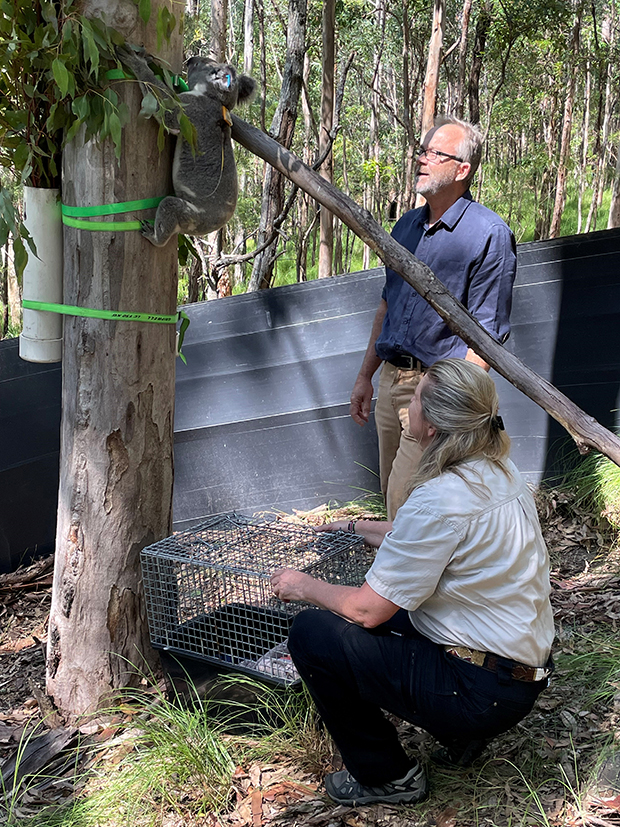
Two-year-old Jagger, the first koala bred in the Living Koala Genome Bank pilot project, has been released into a colony at Elanora Conservation Park, on the southern Gold Coast.

The project is a collaboration between UQ, Queensland University of Technology and the Dreamworld Wildlife Foundation and aims to boost healthy koala genes in local populations threatened by habitat loss and disease.

Associate Professor Stephen Johnston from UQ’s School of Agriculture and Food Sciences said Jagger will help safeguard future generations of local koalas against inbreeding and disease.

“Jagger is fully vaccinated against chlamydia, is disease-free and – thanks to his diverse genetics – will help protect koalas in this population against the risks of inbreeding,” Dr Johnston said.

“He’s just one member of our recently completed pilot project, called the Living Koala Genome Bank, where we propagate koalas with high genetic merit to be released into the wild, improving genetic variation.

“We’ve used proven breeding technologies in combination with an in-depth analyses of koala genetics and disease screening to help manage and conserve koala populations.

“This is achieved by either incorporating valuable genetics from threatened wild koala populations into a captive population, or by providing captive breeding facilities, for the genetic exchange of wild koalas.

“For the duration of our project we were able to take advantage of Dreamworld’s phenomenal wildlife precinct, where animals are housed off-exhibit in a dedicated koala breeding centre.”

The results of the pilot project have been promising, with the research team hopeful the collaboration could become a model to help the long-term conservation of koalas in the wild, as well as a sustainable tourism industry.

“Excitingly, we have been able to demonstrate that zoos, in combination with expertise from universities, can significantly boost conservation outcomes,” Dr Johnston said.

“While it’s still absolutely critical to acquire and maintain good quality koala habitat, the approach we’ve taken is a very practical “hands on” step forward for koala conservation management.

“Our hope is that we can now apply our concept to other wildlife parks in Queensland and possibly northern NSW, to safeguard the future of koalas, and we’re currently consulting with government to do just that.”

Dreamworld Head of Life Sciences Michele Barnes said the innovative project comes at a critical time for koala populations.

“Koala population densities have seen a rapid decline – in the order of 80 per cent – in the past 25 years,” Ms Barnes said.

“With most east coast koalas now listed as endangered, so much more needs to be done in this space to protect them from extinction.

“Dreamworld has a commitment to wildlife conservation, and we’re incredibly proud to be able to offer the infrastructure and skill sets required to partner with UQ and QUT on this project.”

This project was funded by the Advance Queensland Innovation Partnership Grant.

Image above right: Michele Barnes and Associate Professor Steven Johnston releasing Jagger into the wild.

Video and images here.

Media: Associate Professor Stephen Johnston, s.johnston1@uq.edu.au, +61 (0)408 280 963; Ms Michele Barnes, Michele.Barnes@dreamworld.com.au; Karla Judge, karla.judge@dreamworld.com.au, +61 (0)7 5605 8225; UQ Faculty of Science Media, science.media@uq.edu.au, +61 (0)413 334 924.

Adblock test (Why?)


Jagger to help save local koala population - UQ News - The University of Queensland, Australia - University of Queensland
Read More

Meet the local government finalists in the 2022 iTnews Benchmark Awards - iTnews

The scope of local government IT continued to grow in 2020 and 2021, with technology teams doing everything from modernising councils’ online presence, to establishing cross-border sensor networks and a digital twin of tree canopies.

Today we announce that three projects tackling these tasks are finalists in the 2022 iTnews Benchmark Awards in the Local Government category: the Local Government Association of Queensland’s work to transform Queensland councils’ digital experience, the Western Parklands Councils Sensor Network Project in western Sydney, and use of a digital twin measure tree canopy change by the City of Unley in South Australia.

The three projects are featured in the first of a series of mini-documentaries about the 2022 iTnews Benchmark Awards finalists.

Transforming Queensland Councils Digital Experience

The Local Government Association of Queensland (LGAQ) project is tackling one of local councils' most fundamental needs – modern websites - and it is doing it at scale.

With many councils struggling to afford modern websites, the LGAQ created a CMS it deemed suitable for delivering modern, accessible websites at an acceptable price point to Queensland councils, 60 percent of which now use the solution.

Economies of scale enabled LGAQ to offer councils reduced development, support and hosting rates, putting industry standard websites within reach of more local government agencies than ever.

Western Parklands Councils Sensor Network Project

Eight councils in western Sydney have been working together to establish the Western Parklands Councils Sensor Network Project.

The project aims to help the councils monitor and manage the impact of a predicted increase in the Western Sydney Parklands population from 1 million in 2020 to 1.7 million by 2036, while maximising returns from economic development initiatives and streamlining council operations.

A shared network of sensors, measuring water and air quality, heat, noise and people and vehicle movements, is connected to data analytics and an open data platform. 

Measuring Tree Canopy Change with a Digital Twin

Managing the effects of climate change and environmental sustainability are at the core of the third 2022 local government iTnews Benchmark Awards finalist project.

The South Australian City of Unley created a digital twin to measure changes in tree canopy coverage.

While trees can reduce heat, improve health and wellbeing, and contribute to cities’ climate change resilience, they aren’t always accounted for in asset management systems.

Using LIDAR data capture and other tools, a digital twin has been created to more accurately monitor changes to the canopy and help the council better understand factors increasing or decreasing the canopy.

The council has committed to increasing total canopy coverage by 20 percent by 2045.

The mini-documentary series continues

Thank you all entrants in this award category – the standard was extremely high, and separating them was not easy.

The rest of the mini-documentaries about the 2022 iTnews Benchmark Awards finalists’ projects will be published here throughout early April.

On June 15, the award winners will be announced at a ceremony and dinner hosted by KPMG in Barangaroo, Sydney.

Thank you to Okta for sponsoring the Best Local Government Project Award.

Adblock test (Why?)


Meet the local government finalists in the 2022 iTnews Benchmark Awards - iTnews
Read More

COVID-19 vaccination – Local Government Area (LGA) – 28 March 2022 - Australian Government Department of Health

[unable to retrieve full-text content]

COVID-19 vaccination – Local Government Area (LGA) – 28 March 2022  Australian Government Department of Health
COVID-19 vaccination – Local Government Area (LGA) – 28 March 2022 - Australian Government Department of Health
Read More

COVID-19 vaccination – Local Government Area (LGA) – 5-11 years old – 28 March 2022 - Australian Government Department of Health

[unable to retrieve full-text content]

COVID-19 vaccination – Local Government Area (LGA) – 5-11 years old – 28 March 2022  Australian Government Department of Health
COVID-19 vaccination – Local Government Area (LGA) – 5-11 years old – 28 March 2022 - Australian Government Department of Health
Read More

Sunday, March 27, 2022

Employee share reform a budget boost for local tech - https://ift.tt/LlyaTNV

Treasurer Josh Frydenberg will on Tuesday unveil changes to employee share scheme regulation to make it easier for Australian companies to compete for talent, and to remove a ‘perverse’ incentive for local startups to shift their tax domicile offshore.

Importantly, the much-anticipated employee share scheme reforms will be rolled into the budget measures bill, meaning the changes will be passed by the Parliament before the election – providing certainty for the tech sector in the hyper-competitive global market for talent.

The changes, in three key areas, have been long sought-after by the technology sector and levels the playing field for non-listed local companies to offer flexible and attractive equity incentives to employees compared to listed firms or multinational companies based elsewhere.

The Technology Council of Australia welcomed the changes, saying employee shares schemes are an important tool for attracting great talent, and rewarding that talent over time.

sydney
Startup city: Employee Share Scheme gets a makeover

While Australia’s employee share scheme regulation has evolved over the past decade, it has never quite been fit for purpose.

The Treasurer committed to review the scheme in the budget last year, and the fact that it has delivered on three important changes in time for the budget this year is great news for local companies Tech Council chief executive Kate Pounder said.

“It’s particularly important for up-and-coming Australian companies in an environment where there are so many skills shortages and where remuneration has been going up at 15 to 20 per cent [annually],” Ms Pounder said.

“They basically need everything in their armoury to be competitive, and to competitively reward talent,” she said. “The timing of the changes to these rules is excellent to help up-and-coming companies to offer more competitive packages to their staff.

“They have said they are going to move this legislation as part of the budget measures bill. That’s great because it means that it will pass before the election.”

With the legislation passed before the election, the tech industry – and everyone else that takes advantage of the employee share scheme – will get the certainty that it will be in place from July, Ms Pounder said,

The employee share scheme (ESS) changes cover three areas. The first was actually passed in February and involved the “cessation of employment” as a trigger for tax liabilities to be incurred on shares issued under the scheme.

This undermined the benefit to the employee, and acted as a disincentive to job mobility (both of which ultimately hurt an employers ability to attract global talent).

The second area of change, which will be announced by the Treasurer of Tuesday, means that share and options issued by local companies will be treated the same way in relation to tax. This was not the case previously and put Australian companies at a disadvantage.

The tax treatment of options issued to employees by Australian companies has been more onerous than for multinationals domiciled for tax purposed elsewhere.

“For Australian companies that issued options – which is pretty common – it basically forced them to headquarter in the US to avoid that problem. And that’s not an outcome that anyone wants,” Ms Pounder said.

“Fixing that perversity in law is a really practical, sensible outcome that’s going to make a big difference for Australian companies.”

The government said the changes would allow more Australians to share in the value they help to create by being rewarded with equity in the companies they work for.

Currently, employee share schemes generally favour employees of listed companies and, in particular, the senior managers at those firms. This is because the current law imposes arbitrary caps on the number and value of options and shares that can be issued to employees of unlisted companies and to junior employees.

The government is now introducing changes that mean employees at all levels will be able to directly share in the value they help create by removing the cap on the number of options and shares that can be issued, as well as removing the value cap of $5,000 and replacing it with a monetary cap of $30,000 which accruable for any unexercised options for up to $150,000 over five years.

The government says the changes will greatly simplify the scheme, which will itself act as an incentive for more companies and their employees to participate in it.

Do you know more? Contact James Riley via Email.

Adblock test (Why?)


Employee share reform a budget boost for local tech - https://ift.tt/LlyaTNV
Read More

Charles University student Linda Wirf's call out to local farmers - Port Lincoln Times

PhD Charles Sturt University student Linda Wirf seeking male and female farmers from the Eyre Peninsula to participate in a one-hour phone interview before the end of April as part of her study.

Ms Wirf's research will work to assist farmers in creating a space for transformation in agriculture practice by including women's knowledge and perspectives.

The student has an extensive history around the notion of a woman farmer, undertaking a mission with her research to ensure being a woman farmer becomes "the norm" throughout society.

Ms Wirf is in the process of completing her PhD 'Beyond adoption: gendered knowledges in agricultural practice change in Australia,' receiving assistance through a scholarship from the Cooperative Research Centre for High Performance Soils labelled as the Soil CRC.

She was able to expand on her knowledge of gender roles while working on her master's degree with Anmatyerre women in Central Australia, understanding the reasons behind why it is important to include men and women's opinions on conservation and resource management.

Ms Wirf's mother grew up on a dairy farm in Orroroo, South Australia, with the student spending a significant part of her life on the farm, mentioning the concept of a female farmer is part of her "history and psyche."

"I have experienced many of the phenomena that impact farmers and their land management decisions, including bushfires, drought, floods, isolation, feral animals and invasive weeds," Ms Wirf said.

"My interest in this research is shaped in my belief in the need to change agriculture to be more regenerative and environmentally sustainable and I believe that women farmers have a key role to play in this transition."

The participants from the local region who become involved will be interviewed about how they farm and how they make decisions about farm management, with the interviews taking place over a phone call or via Zoom - all information will be confidential.

Ms Wirf will also ask them about participation in agriculture events and what types of activities farmers attend.

"Farmers are increasingly challenged by environmental issues, like climate change and soil degradation, resulting in a loss of agricultural productivity," she continued.

"Co-creation of knowledge with women and men will promote innovation and expand the framework for practice change."

Ms Wirf is based at Charles Sturt with co-supervision from Southern Cross University. For more information or to be a part of this study, contact Ms Wirf on lwirf@csu.edu.au.

Adblock test (Why?)


Charles University student Linda Wirf's call out to local farmers - Port Lincoln Times
Read More

Ti Tree Local Court list, Friday, January 26 - NT News

[unable to retrieve full-text content] Ti Tree Local Court list, Friday, January 26    NT News Ti Tree Local Court list, Friday, January 2...