Rechercher dans ce blog

Saturday, October 2, 2021

Queensland avoids lockdown yet again after two new local cases - 9News

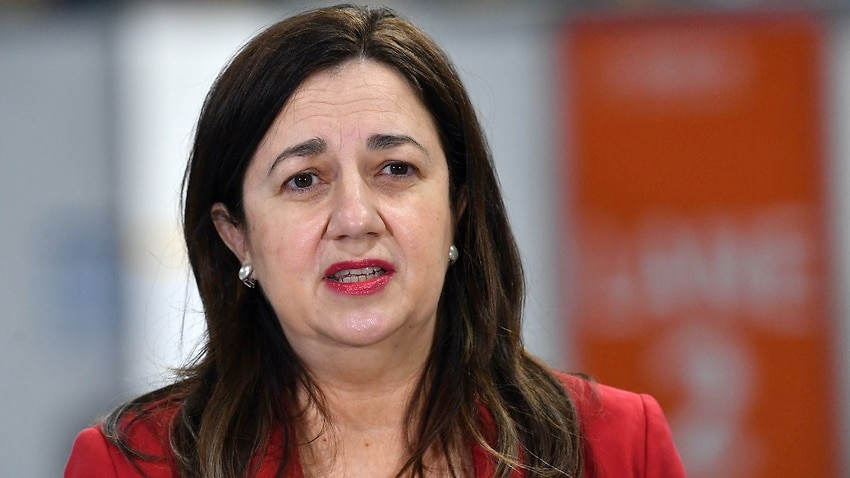
Health Minister Yvette D'Ath said the two new cases were the children of previous infections.

She said investigations into their activity in the community is ongoing.

"They are young individuals in the household, so it is unlikely they have been to other exposure sites beyond what their parents have, but, of course, that investigation is occurring at the moment," Ms D'Ath said.

"We can also report on the truck driver that we said is an animal handler - New South Wales has now advised us that that is a negative-positive case.

"So that case is no longer a concern at all."

More than 21,000 tests were conducted across the state in the last day on top of 22,000 vaccines administered.

There are now a total of 25 active cases in Queensland.

Ms D'Ath said in response to Casino in NSW being sent into lockdown, a number of nearby regions in Queensland will have increased restrictions.

"I do also want to mention that NSW has indicated that it is putting Casino into lockdown on the NSW border, which means that from 1am tomorrow morning, we will be putting the Richmond Valley Local Government area that is in that border zone into that higher level of restrictions as a hotspot as well," she said.
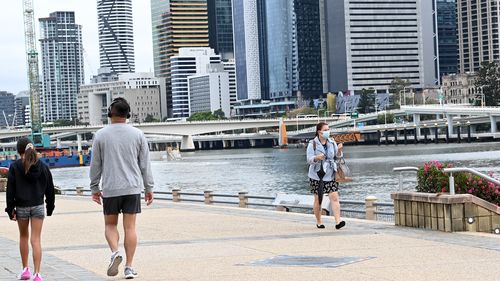
Brisbane CBD from Southbank
Queensland has recorded two new local COVID-19 cases today, both infections are children and linked to previous cases. (Getty)

"Please, anyone who is in that area or travelling to that area be aware of the changes."

She confirmed that tomorrow's NRL grand final will go ahead as planned, with the stadium now housing new vaccine pop-up clinics.

"There will be two locations, one at the north and one at the south entry," Ms D'Ath said.

"The northern side is open from 10.30 to 6pm. The Wally Lewis statue end on the southern side is open from 4pm to 6pm.

"If you get a chance, pop along and get vaccinated before the game or you can come along and make a booking to come and get vaccinated.

"You do not need to make a booking, even if you have a booking that is already booked in for the next few weeks, you can walk in and get vaccinated now. Just tell them you had a booking and that will be cancelled."

Suncorp Stadium (pictured) could lose the NRL Grand Final to Townsvile if a coronavirus outbreak materialises in Brisbane.
Suncorp Stadium in Brisbane will offer pop-up vaccinations at tomorrow's game. (Getty)

Queensland Chief Health Officer Dr Jeanette Young has urged all residents in the Portside area of Hamilton to come forward for testing.

"Please keep coming forward, particularly anyone who lives in Portside, Hamilton, I really need you to come forward and get tested because one of the cases has been there," she said.

"Anyone in Queensland, anywhere, any time, any symptoms, come and get tested."

Dr Young said the day's cases were the children of the man announced yesterday, who had been down at the Gold Coast for four days.

"So they were in quarantine, but they did have a short period of time, of course, before they went into quarantine," she said.

"We are double-checking that there weren't any other venues that they attended that they weren't at with their father, so there may be some additional venues come through from that."

Gold Coast skyline
The Gold Coast has emerged as a potential infection zone after a positive case visited the area. (Paul Giggle)

Premier Annastacia Palaszczuk yesterday insisted a lockdown is not yet necessary to control the growing outbreak, but said she won't hesitate to call off the NRL Grand Final at Suncorp Stadium in Brisbane on Sunday if the public health advice demands it.

Five new cases were yesterday announced in northern New South Wales, including one in Cabarita Beach and one in Byron Bay.

Hundreds of unmasked protesters gathered at the Queensland-NSW border, demanding freedom from mandatory vaccinations.

Queensland Police today fined a Sydney truck driver following investigations into his movements whilst travelling in Queensland.

The 38-year-old man travelled to Brisbane from Sydney on September 16 and attended a location in Brisbane, in breach of freight protocols, before testing positive to COVID-19.

He remains in quarantine and was this morning fined $1378.

New cases in Queensland

Of Friday's new cases, one is linked to the state's aviation cluster.

The Brisbane man spent four days on the Gold Coast with his family, sparking a number of exposure sites at Kirra and Cooolangatta.

The other local case is a man who travels to collect animals under provisions for freight operators.

He was only infectious on the Gold Coast for one day and is considered low-risk.

"So this is a gentleman who travels up and down from New South Wales picking up animals and relocating them. So he was infectious in the community for a short time in the Gold Coast when he was picking up an animal there," Dr Young said.

Dr Young said a third case detected in hotel quarantine in a traveller who returned from Egypt is "not a risk to the community".

Across six LGAs, masks are now mandatory indoors and outdoors unless eating or drinking, and a maximum 30 people are allowed at home.

Pubs and restaurants have returned to one person per four square metres capacity.

Weddings can only have 100 guests.

Aged care, correctional centres, hospitals and disability service providers will close to visitors.

The rules apply to Brisbane, the Gold Coast, Logan, Moreton Bay, Townsville and Palm Island.

Adblock test (Why?)


Queensland avoids lockdown yet again after two new local cases - 9News
Read More

Friday, October 1, 2021

Victoria sets new record with 1,488 local COVID-19 cases and two deaths - SBS News

There are now 11,591 active infections in the state.

More information on the new cases and two deaths is expected later on Saturday.

It comes as residents in two regional Victorian towns awake on Saturday to their first day of seven under a fresh lockdown.

Shepparton and Moorabool were plunged back into lockdown at 11:59pm on Friday to contain growing cases.

Shepparton's active cases have grown to 24, with Moorabool currently dealing with 32 cases.

Meanwhile, hundreds of thousands of Victorians have been issued an ultimatum: get vaccinated for COVID-19 in two weeks or risk losing your job.

All Victorian authorised workers must have their first vaccine dose by October 15 and a second by November 26 to keep working on site, as part of a new statewide mandate.

Read More

The requirement will cover retail workers, personal trainers, MPs, journalists, faith leaders, judges, police, lawyers, actors and professional sportspeople.

Of the 1.25 million estimated authorised workers in the state, Premier Daniel Andrews says more than a million have already had their first dose.

The government plans to consult with certain industries such as energy, waste management and faith leaders but Mr Andrews flagged there would be few exemptions.

The October 15 deadline will not replace Victoria's separate vaccine mandate timelines for aged care, healthcare, freight, construction and education workers.

Mr Andrews played down the possibility the broader mandate could spark more anti-vaccine protests, with another three demonstrators arrested on Friday.

Read More

"I'm not taking lectures on freedom from people who will hold all of us back," he said.

Victorian Chamber of Commerce chief executive Paul Guerra welcomed the decision, saying it provided businesses with "certainty, guidance and protections".

The Pharmaceutical Society of Australia also labelled it a "step in the right direction".

But the Victorian opposition is demanding the public health advice behind the expanded mandate be publicly released.

"It has all the appearance of panic," Shadow Treasurer David Davis said.

The state government has also revealed its plan to restart the construction industry from Tuesday after a two-week shutdown in Melbourne and other locked-down regions.

Adblock test (Why?)


Victoria sets new record with 1,488 local COVID-19 cases and two deaths - SBS News
Read More

Shining a light on our local heroes - The Age

Some time ago, I wrote about the need for journalism in these times to cover the breadth of experience in our community. The news is often awful. The anxiety is understandable. The politics is intense and often ugly. We need to cover these issues well, but we do try to provide context to the politics, and give the health and scientific perspective of coronavirus prominence, too.

Local Hero: Jazz singer and violinist Fem Belling on the Band Wagon.

Local Hero: Jazz singer and violinist Fem Belling on the Band Wagon.Credit:Chris Hopkins

Everything is linked, and from my perspective, there are few “right” answers. We need to hold governments and authorities accountable for their decisions, but it can be too easy to jump to blame one group or another and, usually, there is little point to it.

I wince at the term “good news” journalism because it can sound lame, so much sugar-coating of what is undoubtedly the biggest challenge of our lifetimes. Millions have died around the world, and locally we remain in a debilitating lockdown, our health system already stretched.

But I am not one of those journalists who believe that only conflict makes a good story, that outrage is always better than nuance and an allowance for human frailty. Victorians are a diverse bunch, although if anything this crisis has brought a greater sense of shared experience and community (I’d be interested to know if you agree with that).

We would be telling only part of the coronavirus story if we avoided the acts of generosity, innovation and kindness as people think of ways to make things work, to look after each other, or to establish new kinds of enterprises that respond to emerging needs.

We have done many of these stories. At the end of last winter’s lockdown - how long ago it seems - we launched Marvellous Melbourne, an unashamed celebration of all our city has to offer.

Now, we are publishing a series called “Local Heroes”. I tried to avoid the word “hero” because it’s overused and most people doing good things don’t think of themselves as heroes at all. But we couldn’t think of something better.

It is designed to shine a spotlight on people who are controlling what they can control. The loss of control, the uncertainty, has been one of the biggest challenges during this pandemic. So for individuals or organisations to use what control they can muster to make a difference for themselves or for others can be inspiring. The Age also publishes a newsletter called Greater Good, which compiles stories that you may have missed in the blitz of the daily news.

Here are a few stories we have published recently that seek to celebrate the best of humanity, or the most amusing, or the truly quirky.

Senior writer Tony Wright wrote about jazz singer and violinist Fem Belling, who is preparing for the return of live music. She has a pop-up mobile jazz club ready to roll.

Cassandra Morgan reported on three Melbourne year 9 students, Jack, Darcy and Wesley, who set up CovidBaseAU to track coronavirus data. They at first wanted to keep their age secret for fear they would not be taken seriously. Now, CovidBaseAU is a website and has more than 26,000 Twitter followers.

“We were like, well, if these other people can do it, there’s no reason we can’t,” Jack said.

Lastly, from Good Food, a lovely story about Solidarity Pancakes, a pandemic cook-up dreamed up by VicHealth CEO Dr Sandro Demaio. What started as a Sunday morning ritual to cook pancakes for his partner Olivia, a doctor, and his 98-year-old grandmother, Bette, was shared online, and Nigella Lawson and Jamie Oliver gave it their approval. Hundreds of others have joined in as an act of solidarity with our healthcare workers.

Do send us ideas about people or groups doing extraordinary things. They can be tiny acts of kindness, or large projects that reach thousands. After we began Local Heroes, we realised how many there are.

Adblock test (Why?)


Shining a light on our local heroes - The Age
Read More

How local communities helped polar scientists during the pandemic - Nature.com

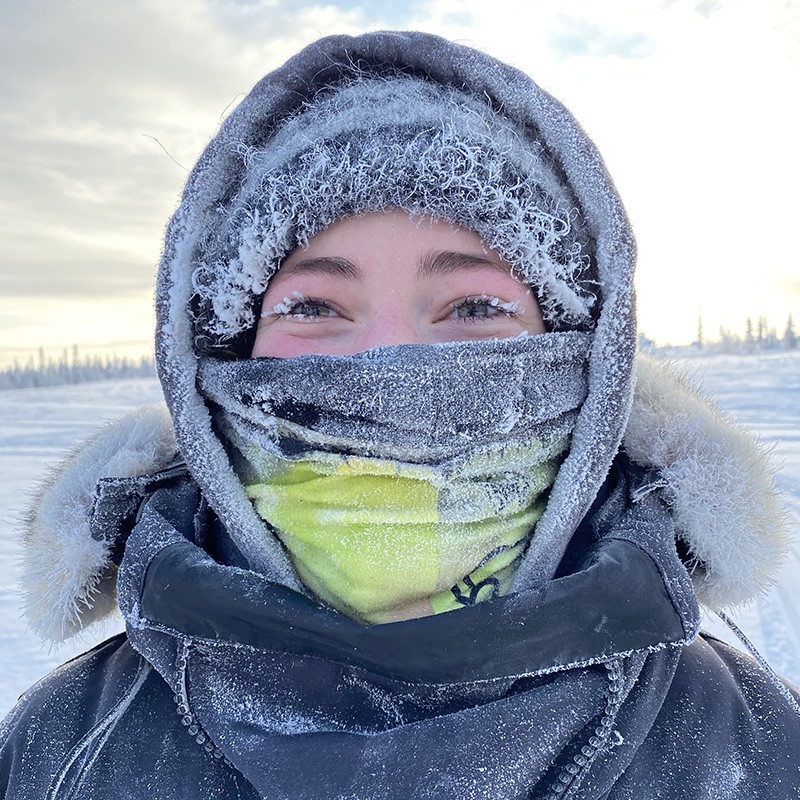
Erica Gillis in the subarctic ice area with ice and frost on her face and clothing.

Erica Gillis managed research at the Churchill Northern Studies Centre in Canada during the COVID-19 pandemic.Credit: Erica Gillis

Erica Gillis is committed to fostering connections between scientists and local community members. In her previous role as research manager at the remote Churchill Northern Studies Centre (CNSC) in Canada, Gillis coordinated with visiting researchers, oversaw in-house projects and developed relationships between researchers and Churchill residents. When the pandemic restricted travel to the field station, researchers relied on Gillis and her connections with the local population to keep their projects going. Gillis — now a biologist for Fisheries and Oceans Canada in Yellowknife — discusses how partnerships such as these can make research more resilient, and shares lessons from the pandemic.

What is the Churchill Northern Studies Centre?

The CNSC is an independent, non-profit research station that has been in operation since the 1970s. It’s in Churchill, Manitoba, just below the Arctic Circle, on the west coast of the Hudson Bay. Churchill is a small town with a population of about 800 people. Scientists who work at and visit the centre have a very good relationship with the local community, in part because many of them have been conducting research here for decades. Churchill is often called the accessible Arctic because people can come here by train or boat. In terms of conducting Arctic research, access to a lot of communities is really difficult and expensive. By having the train there, it’s easier for researchers to travel to Churchill and transport equipment and samples.

The research programme at the CNSC has three parts. Visiting researchers conduct their own fieldwork. The small research team does contract work collecting data for scientists, as well as in-house research on its own projects. As the research manager, I oversaw the logistics of all the research done there.

Can you provide an example of an ongoing project?

Northern Manitoba is home to three bear species: polar bears (Ursus maritimus), black bears (Ursus americanus) and grizzly bears (Ursus arctos horribilis). During the summer, when they come ashore rather than roaming on sea ice, polar bears regularly walk through the town of Churchill, which presents a significant safety concern for the people there. Douglas Clark at the University of Saskatchewan in Saskatoon, who has been going to the CNSC since 1992, is currently working on a wildlife-camera project to non-invasively monitor bears and how they interact with humans and human infrastructure. There are cameras set up around the CNSC property and in the nearby Wapusk National Park. Another of his goals is to engage local community members by giving them cameras to put up on their own property. They have complete ownership of the photos they collect and can keep the cameras for however long they want. Thankfully, they often choose to share photos with us and each other. It’s a great way to learn more about the bears and how we can minimize human–wildlife interactions, while still doing research work, to protect bears and people.

How did the pandemic affect the CNSC’s research programme?

When COVID-19 and travel restrictions hit, researchers weren’t able to come to Churchill. The CNSC never officially closed: research is considered an essential service, so we were able to stay open at limited capacity. Some of the longer research programmes now have blank marks in their data sets for 2020. But the projects that had strong local partnerships were able to continue with a little facilitation from the CNSC. For instance, it wasn’t very hard for the camera project to make progress when the pandemic hit, because it had a local component. I think that if he had been brand-new to Churchill and hadn’t known anyone there, it would have been impossible for him to continue his research.

How did you assist researchers during the pandemic?

I was able to connect researchers not based at the CNSC with community members in Churchill. I provided information to researchers about what the local COVID-19 situation was here, and whether community members were open to participating in research. For instance, the CNSC and I partnered with Oceans North, a non-profit organization based in Ottawa that fosters science and community-based conservation, to complete a study on beluga whales (Delphinapterus leucas). The purpose of this three-year study was to investigate beluga behaviour near whale-watching vessels in the Churchill River estuary. During the first year, in 2019, Oceans North sent up a graduate student from Scripps Institution of Oceanography in La Jolla, California, to lead the research. With restricted travel in 2020, she was unable to come up again, and the CNSC led the entire field season with the help of a local high-school student. This summer, the CNSC once again completed the field component of this research on behalf of Oceans North.

How do you build connections with local communities?

It’s kind of a snowball effect. For instance, one of my good friends is a trapper who is interested in wildlife cameras. He suggested someone else who might want to participate, who then suggested another person. Now a lot of the trappers in Churchill have wildlife cameras. It’s been cool to see them take ownership of the project. They share photos with each other and with us and enjoy talking about what they see. We also build connections by running into someone at the grocery store or the post office and asking if they’d like to be involved. A huge benefit of being a locally based researcher is that you can have those informal conversations.

To develop these connections, it’s important for scientists to be involved with the local community from the beginning and engage with them throughout the research process. Researchers can ask community members what they want to know and how they can help. Many Indigenous communities and northern communities have already outlined guidelines for how they want to engage in research. For instance, anyone who conducts research in the territory of Nunavut has to apply to the Nunavut Research Institute in Iqaluit before they conduct work there.

What lessons from the pandemic will you carry forward?

A lot of Arctic and subarctic projects that involved connections with the local community and built local capacity were resilient and able to make progress during the pandemic. It’s really important to build these relationships, but it takes time. Scientists who travel somewhere for a summer, collect data and leave are missing out on opportunities to connect with people and develop even better research projects. Anyone can be a scientist and anyone can participate in research; you don’t have to have a PhD and you don’t have to be a professor at a university. In a new post-pandemic world, maybe researchers won’t need to travel to their field sites every year. Maybe they can take the time to train the local community on how to do it instead. All we have to do is give people the knowledge and let them take off with it.

Adblock test (Why?)


How local communities helped polar scientists during the pandemic - Nature.com
Read More

Queensland avoids lockdown as it records two local COVID-19 cases - SBS News

Read More

The second is a man who works relocating animals interstate, who tested positive in NSW and was only infectious on the Gold Coast one day.

Premier Annastacia Palaszczuk says restrictions do not need to be tightened any further in six local government areas in the southeast and Townsville as there is still no evidence of community transmission.

"If we do see any unlinked community transmission, I'm quite sure that Dr Young will not hesitate to recommend a lockdown," Ms Palaszczuk told reporters on Friday, referring to Chief Health Officer Jeannette Young.

"That's good news for the moment, Queensland. So keep up that great work."

The premier again denied she was resisting ordering a lockdown because of the NRL grand final in Brisbane on Sunday and the Rugby Championship double-header on the Gold Coast on Saturday night.

She said if there is evidence of seeding or community spread before either of those events she will tighten restrictions.

"Can I just make it very clear: if the advice is to go into lockdown, we will go into lockdown. OK," Ms Palaszczuk said.

"So there's no ifs and buts here, people. This is serious.

"It's going to depend whether we see any unlinked community transmission over the next 24 to 48 hours."

There are now eight cases connected to the aviation cluster, with another four separate single-person clusters across the southeast and Townsville.

Dr Young said her main concern was the man who was infectious in the community at Kirra and Coolangatta between Saturday and Wednesday.

"Anyone who has been to any of the venues or anywhere in that part of the Gold Coast over the last week, if you've got any symptoms at all now is the time to really please come forward and get tested," she said.

Stage-two restrictions are now in place in Brisbane, the Gold Coast, Moreton Bay, Logan, Townsville and Palm Island regions.

Visitors to private homes are capped at 30 people and capacity limits of one person per four square metres have been imposed in indoor venues such as cafes, restaurants, cinemas and theatres.

Weddings and funerals are capped at 100 people, and crowds at large venues such as the NRL grand final will be restricted to 75 per cent capacity.

Read More

There are more than 160 exposure sites listed across Brisbane, the Gold Coast, Moreton Bay and Townsville, including 38 close-contact venues.

Face masks must be worn indoors unless people are eating or drinking, and outdoors where people cannot socially distance.

Dr Young said anyone living in the six restricted regions must abide by the same rules, such as face-mask wearing, no matter where they travel in the state.

"You've got to follow exactly the same restrictions as if you're at home," she said.

"And those people who are coming from areas that don't have those restrictions, (must follow the rules) when they come into an area that does have the restrictions."

Queensland also recorded one new virus case in hotel quarantine, which was overseas acquired, on Friday.

Adblock test (Why?)


Queensland avoids lockdown as it records two local COVID-19 cases - SBS News
Read More

Pin point progress on your local council's Coastal Management Program - NSW Liberal Party

Minister for Local Government Shelley Hancock today announced the release of a new interactive map that allows the community to see the progress coastal councils are making with their Coastal Management Programs (CMPs).
 
Mrs Hancock said the innovative tool makes it easier for people to see what work is underway to help manage their local coastlines.
 
“Now our coastal communities can jump online and easily see progress on their council’s CMP, as well as how many grants their council has received through the NSW Government’s Coastal and Estuary Program,” Mrs Hancock said.
 
“In addition to links to the relevant local council’s website for more information, the new map has clickable colour-coded icons to reflect which stage in the process the CMP is up to.
 
“It’s a valuable asset that is going to help facilitate local communities to engage even more with councils and their efforts to protect and preserve their precious coastline.”
 
Parliamentary Secretary for the Environment and Member for North Shore Felicity Wilson said the NSW Government is committed to working with local councils to assist with planning and managing the state’s coastlines and estuaries.
 
"This new interactive map is another example of how the NSW Government is supporting councils and their communities to protect their local environment," Ms Wilson said.
 
“Grants under the Coastal and Estuary Program help councils plan for the future and protect these unique natural assets, which are brimming with native flora and fauna, and are also popular places for recreation.”
 
Coastal councils can apply at any time during the 2021–22 financial year for funding towards planning and studies to help develop their CMP.
 
View the map at www.environment.nsw.gov.au/topics/water/coasts/coastal-management/programs/coastal-management-program-progress.

Adblock test (Why?)


Pin point progress on your local council's Coastal Management Program - NSW Liberal Party
Read More

Thursday, September 30, 2021

Victoria reports 1,143 new local COVID-19 cases and three more deaths - SBS News

To try to keep the state on its path out of lockdown, the premier announced that by Friday 15 October, all authorised workers across Victoria must have had at least one vaccine dose.

They must be fully vaccinated by 26 November.

“This is critically important to keep the case numbers down so that we can open up on 26 October, get our freedom back, get the economy going again, and deliver the national plan,” the premier said.

"This is advice from both the Burnet Institute and advice from the acting chief health officer and the public health team and, as all Victorians know and understand, if we are provided with that advice that we follow that advice.

"The science is what will get us through this and it is incredibly important that people who have not had a first dose and are an authorised worker are moving, are out and about, are part of all of that movement that we know is so challenging when it comes to the spread of this virus."

By 26 October, 70 per cent of the eligible population is expected to be fully vaccinated.

Read More

Friday's deaths included a man in his 80s, a woman in her 70s and a man in his 70s.

There are 395 people currently in hospital with COVID-19, of which 87 are in intensive care and 59 are on a ventilator.

Mr Andrews said only 5 per cent of those in hospital were fully vaccinated.

"The key point here is only a tiny number of people who become gravely ill have had a first and a second dose of any of the COVID-19 vaccines," he said on Friday.

Authorities blame Thursday's rise in caseload on illegal gatherings in Melbourne over the AFL grand final long weekend.

Health authorities believe at least 500 of Thursday's cases are linked to AFL gatherings and are urging anyone who attended one to get tested, whether they or their companions are displaying symptoms or not.

Read More

COVID-19 Commander Jeroen Weimar said on Thursday if the jump in numbers becomes a trend, Victoria will go from being just below the Burnet Institute's roadmap-linked case projections to the worst scenario of up to 2,900 daily infections by late October.

"We know that everyone is fatigued, tired of this. But today is a significant setback in how we manage this outbreak," Mr Weimar told reporters.

Read More

To help bring the 80 per cent fully vaccinated benchmark forward, the time between Pfizer vaccine doses will be halved to three weeks in Victoria.

The interval change kicks in from Monday, allowing anyone who has received their first Pfizer dose to bring forward their second. The state's vaccine booking system will be updated overnight on Sunday.

There will also be a shift in 88,000 Moderna vaccines from community pharmacies to state clinics to hasten the rollout, with pharmacists struggling to cope with the sudden demand.

Despite the federal government expanding Pfizer eligibility to Australians over 60 from Friday, the change is not being implemented in Victoria's state-run hubs.

For a list of Victoria's exposure sites, click here.

With SBS News

Adblock test (Why?)


Victoria reports 1,143 new local COVID-19 cases and three more deaths - SBS News
Read More

Ti Tree Local Court list, Friday, January 26 - NT News

[unable to retrieve full-text content] Ti Tree Local Court list, Friday, January 26    NT News Ti Tree Local Court list, Friday, January 2...